Dominical, Uvita & Ojochal · Waterfalls, Whales & Rainforest Coast
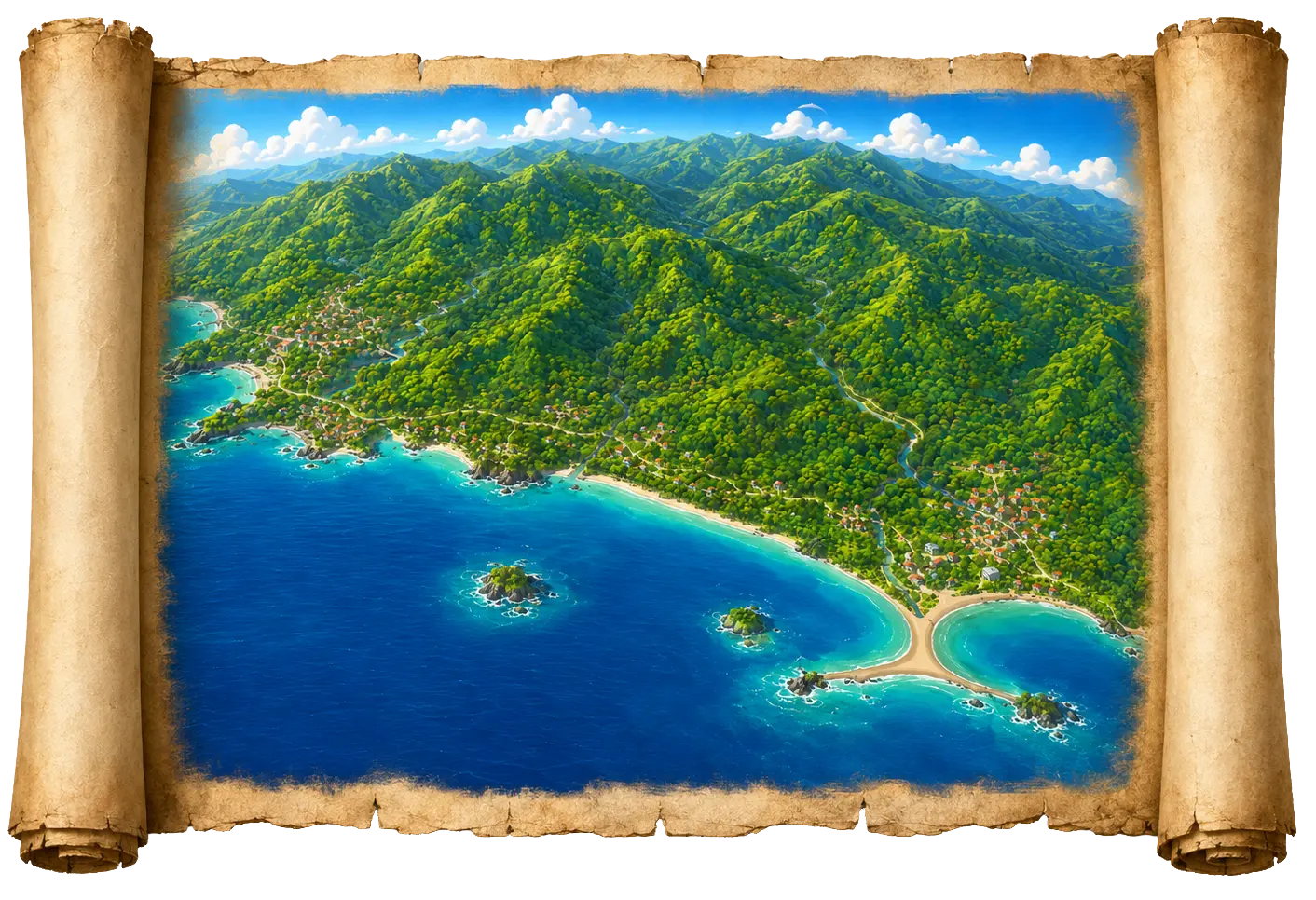
Costa Ballena is one of Costa Rica's most scenic South Pacific regions: a coastal corridor where rainforest mountains, waterfalls, surf beaches, whale watching, wildlife, river valleys, ocean views, and small communities come together.
The region is best understood through three main areas. Dominical is the surf and beach-culture side of Costa Ballena, known for stronger waves, a relaxed coastal rhythm, river scenery, beach walks, and easy access to nearby waterfalls and rainforest-covered hills.
Uvita is the central gateway to Marino Ballena National Park, the Whale Tail formation, whale watching, beaches, services, and many of the region's nature-based activities. It is often the most practical base for first-time visitors because it balances beach access, services, tours, and location.
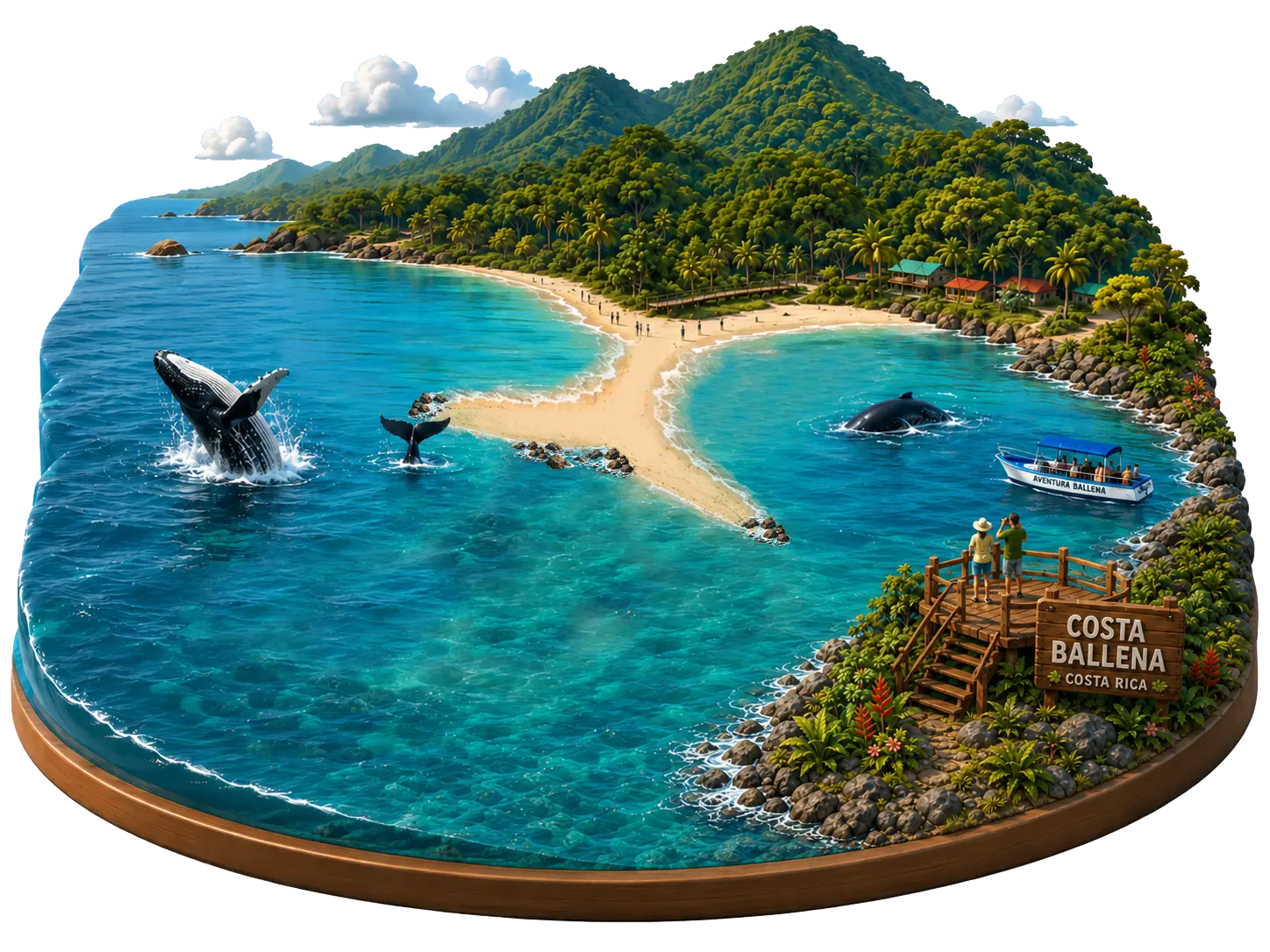
Ojochal adds the quieter, more residential side of Costa Ballena, known for its jungle surroundings, hillside setting, international community, nearby beaches, and slower lifestyle. Costa Ballena is not one dense beach town — it is a spread-out coastal region where each area has its own personality.
For visitors, Costa Ballena offers whale watching, surfing, waterfalls, national park beaches, scenic drives, wildlife, photography, and quiet coastal exploration. It works best for travelers and residents who want Costa Rica's Pacific coast with more space, more nature, and a stronger connection between mountains, rainforest, and ocean.

Click any pin to discover hotels, restaurants, tours, and services across Dominical, Uvita, and Ojochal. Use the layers button to filter by category.
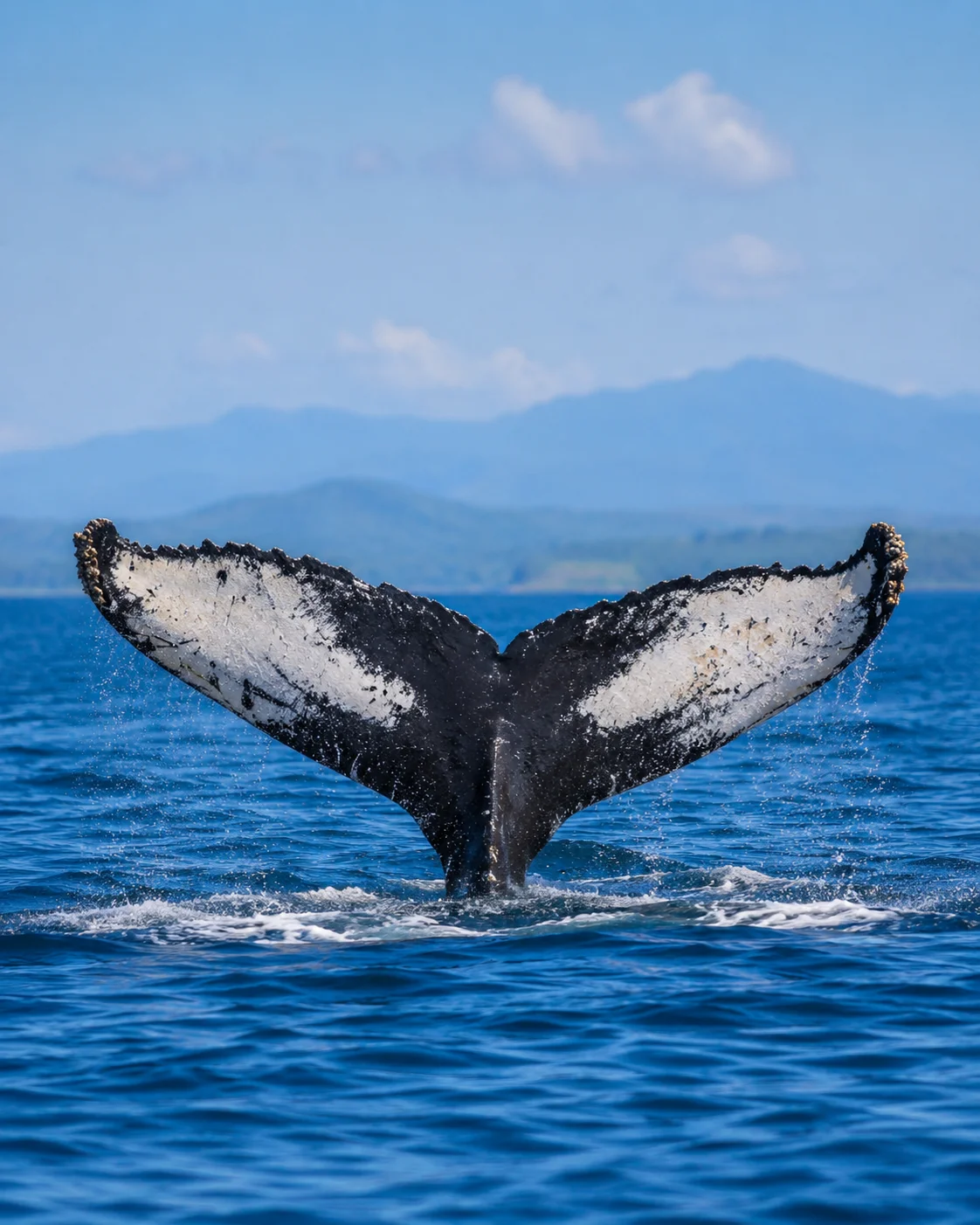
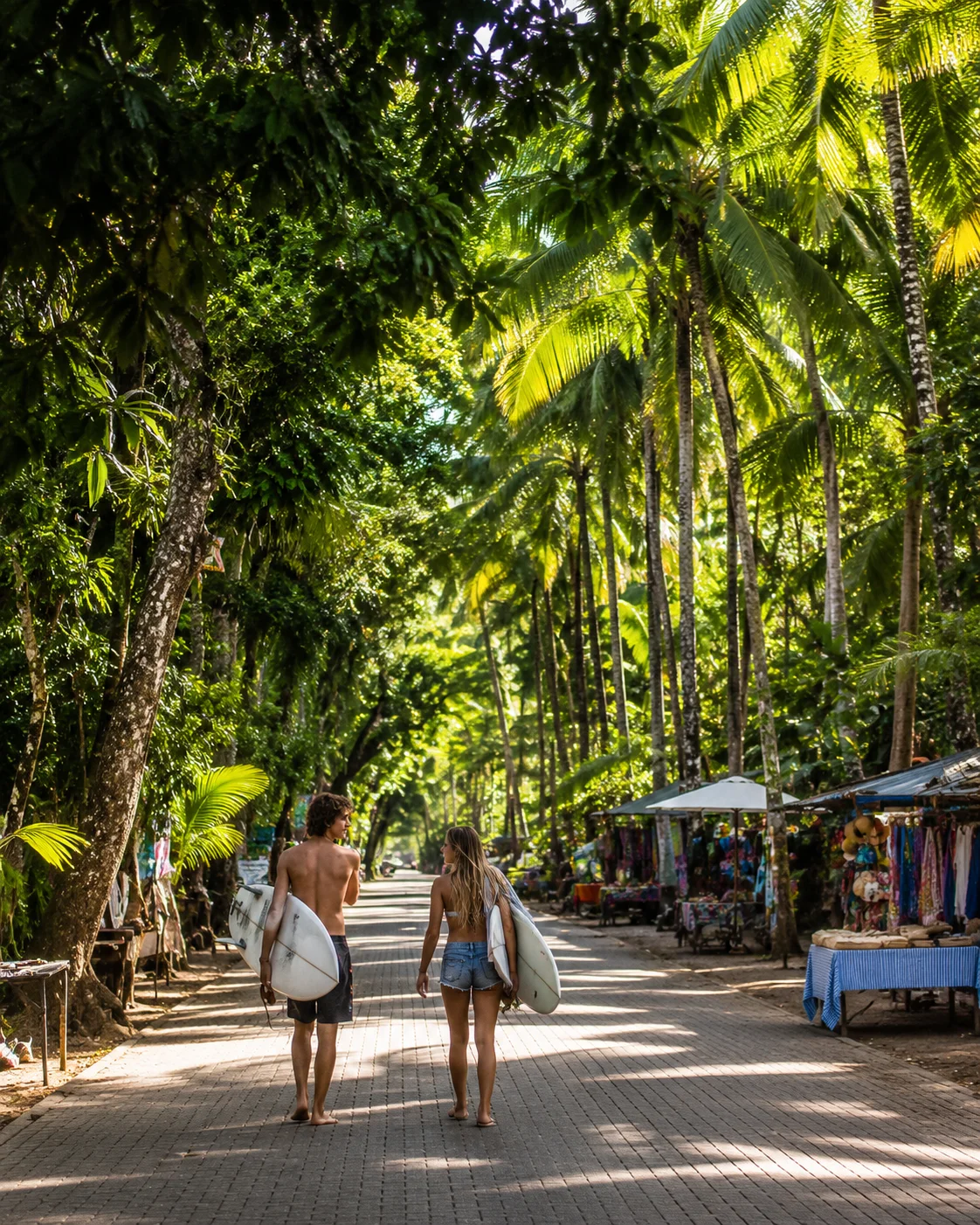
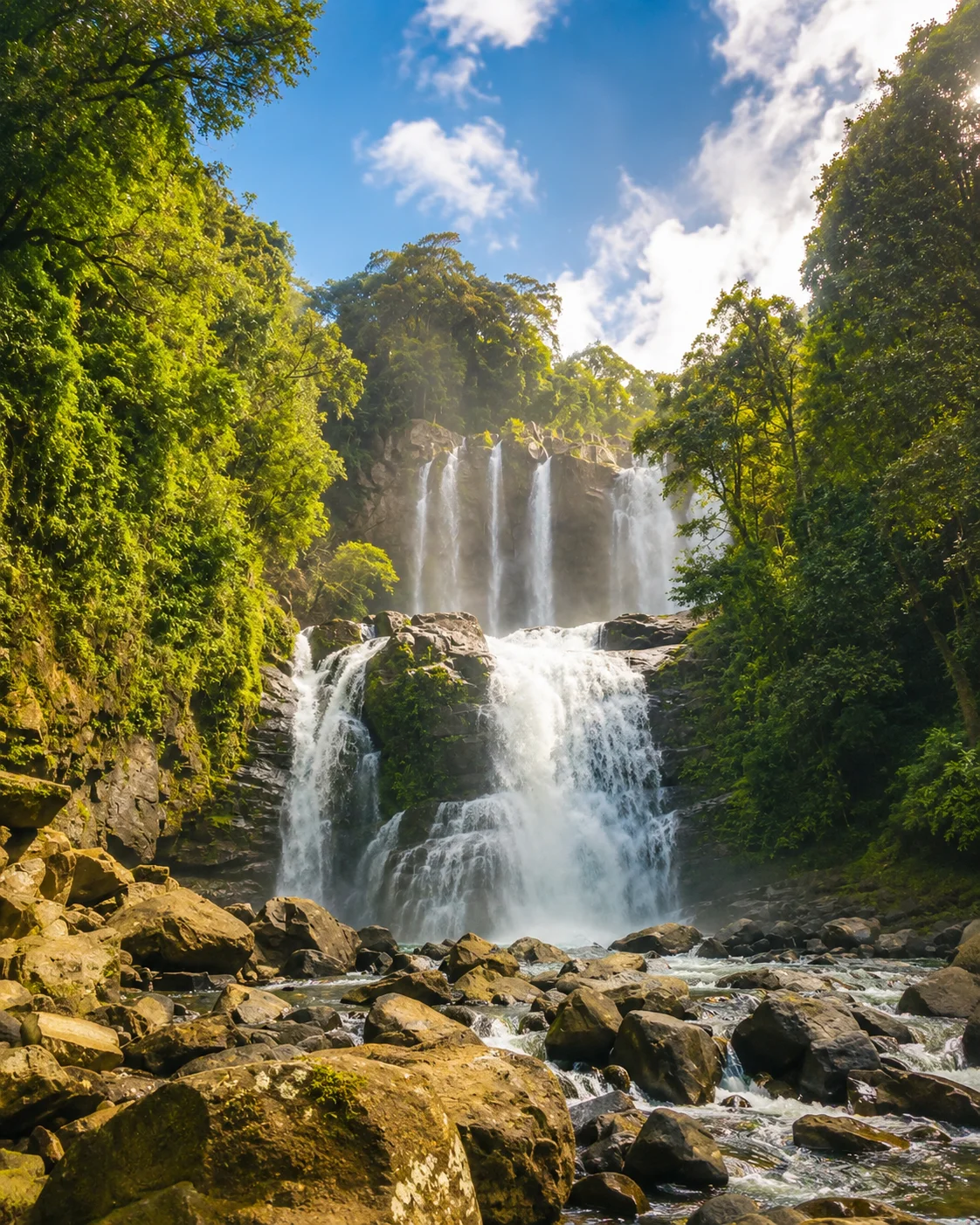
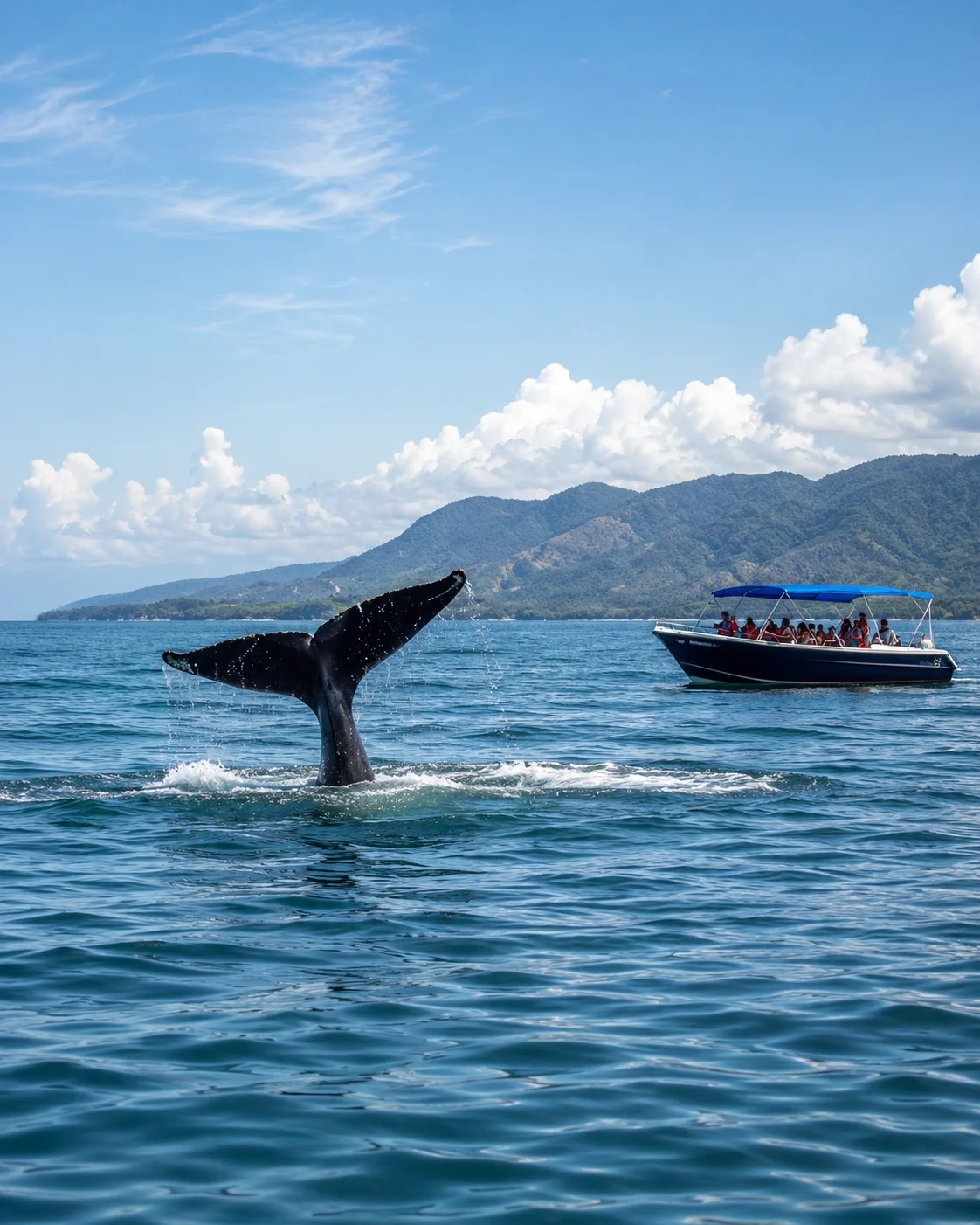
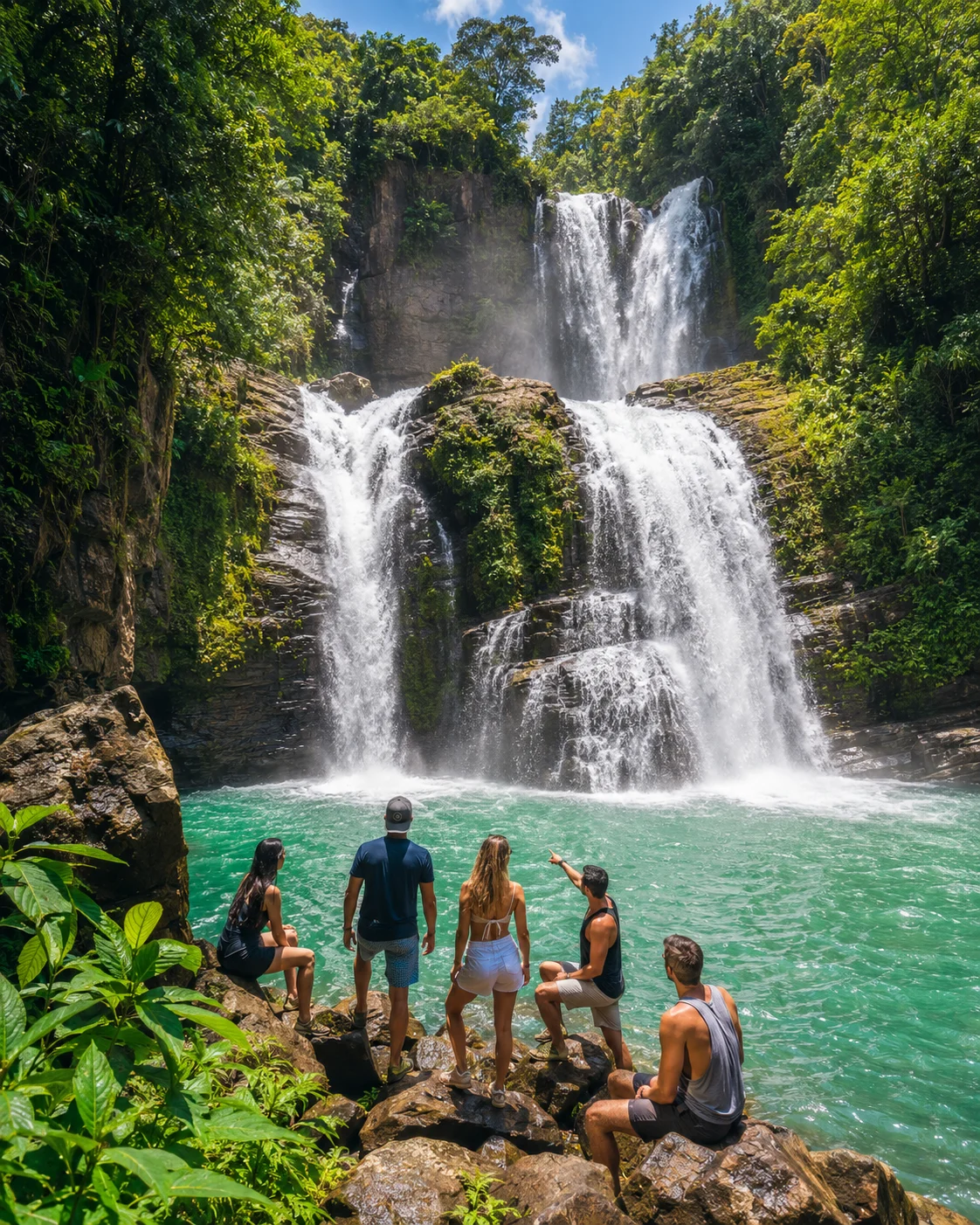
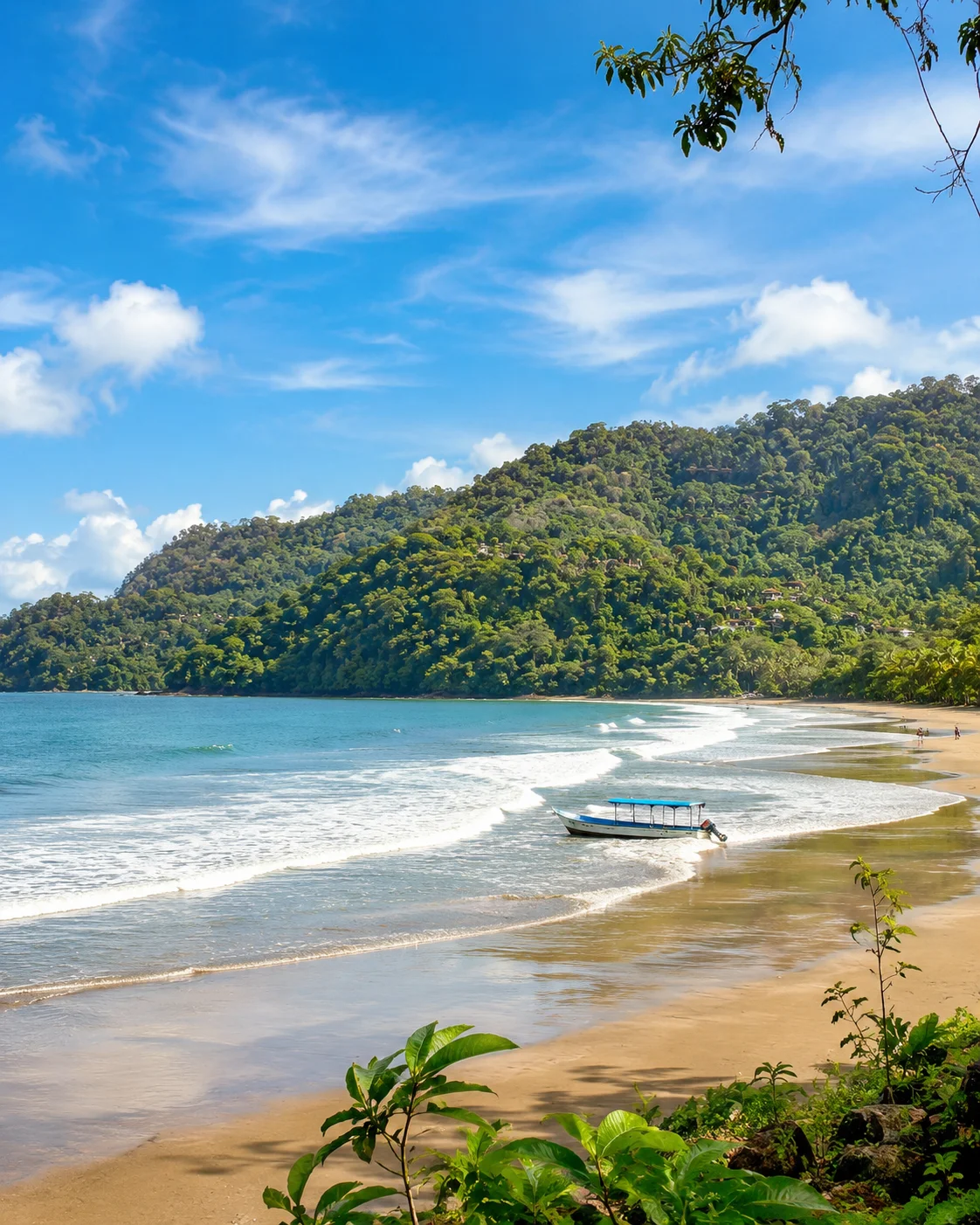
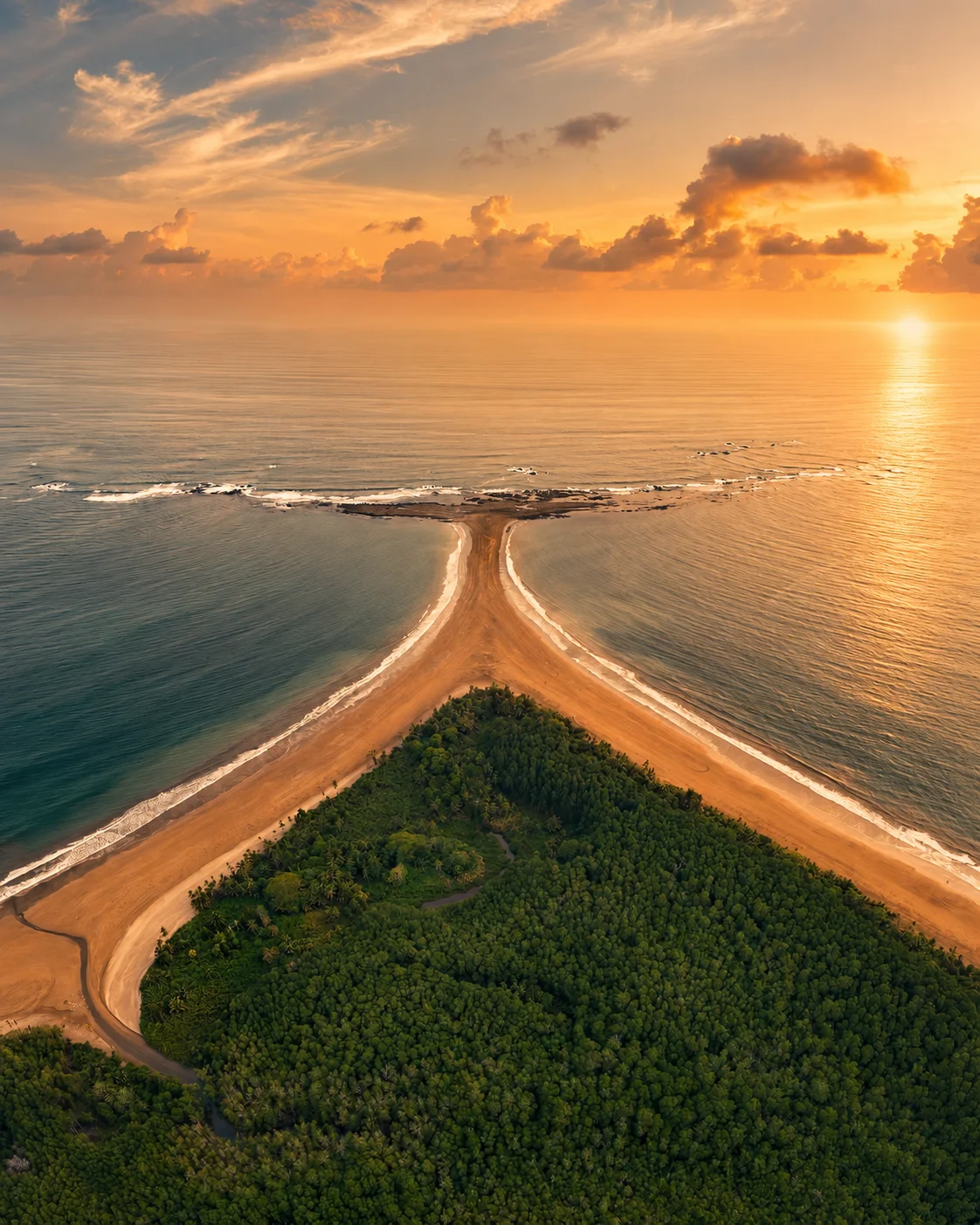
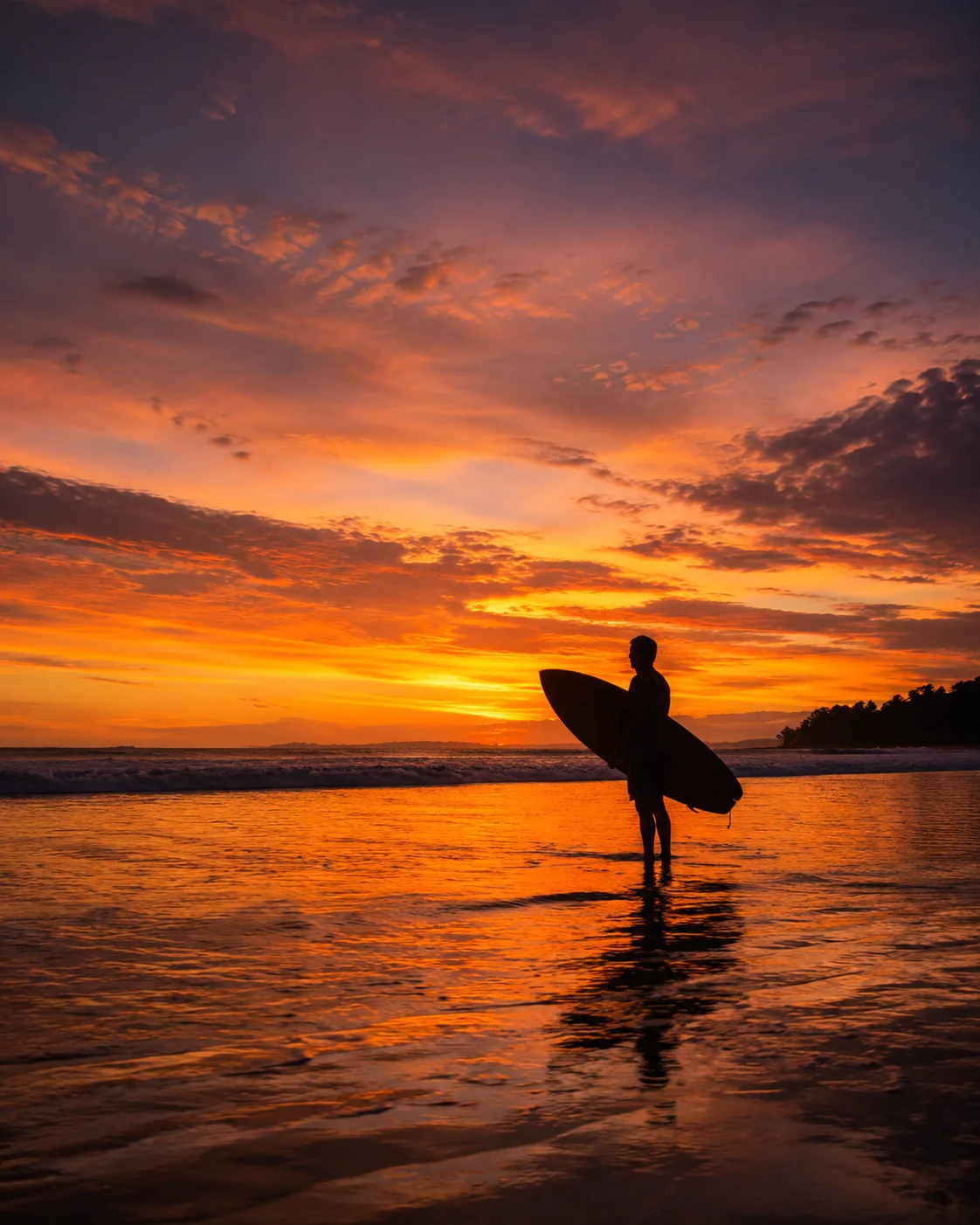
Whale tails off the bay, waterfalls in the rainforest, the Whale Tail sandbar at low tide and a surfer at sunset — this is what a day on the Whale Coast looks like.


Costa Ballena means Whale Coast. It is the name commonly used for the South Pacific coastal region that includes Dominical, Uvita, Ojochal, and nearby coastal communities. The name comes from the area's strong connection to humpback whales, Marino Ballena National Park, and the Whale Tail formation in Uvita.
Costa Ballena is not just one town. It is a coastal corridor with different personalities: surf in Dominical, whale watching and national park access in Uvita, and a quieter residential rainforest lifestyle around Ojochal.
Costa Ballena is usually understood through three main towns or areas: Dominical, Uvita, and Ojochal. Dominical is the surf and beach-culture area. Uvita is the central service hub and gateway to Marino Ballena National Park. Ojochal is quieter, more residential, and known for its jungle setting, hillside atmosphere, nearby beaches, and slower pace.
Together, they create the full Costa Ballena experience.
Yes. Costa Ballena is worth visiting if you want a greener, more spacious, nature-focused version of Costa Rica's Pacific coast. It is especially good for travelers who want waterfalls, whale watching, surfing, quiet beaches, rainforest hills, scenic drives, wildlife, and photography without the feeling of a dense beach town.
Costa Ballena is not the most compact destination. Its value is space, scenery, and variety.
Yes. Uvita is worth visiting, especially if you want whale watching, access to Marino Ballena National Park, the Whale Tail, waterfalls, beaches, and a practical base for exploring Costa Ballena. Uvita is more functional than many small beach communities in the South Pacific, with services, transportation options, groceries, restaurants, cafés, activity providers, and access to nearby beaches and natural attractions.
It works well for families, couples, nature travelers, digital nomads, photographers, and people considering the South Pacific as a future home.
Yes. Dominical is worth visiting if you like surf, beach culture, river scenery, and a relaxed South Pacific atmosphere. Dominical has a more surf-oriented and casual personality than Uvita. It is often better for travelers who want stronger waves, a laid-back beach rhythm, and easy access to nearby waterfalls and coastal roads.
For many visitors, Dominical and Uvita work well together: Dominical for surf and beach culture; Uvita for whale watching, national park access, services, and a more central Costa Ballena base.
Yes. Ojochal is worth visiting if you want to experience the quieter and more residential side of Costa Ballena. It is a good stop for travelers who enjoy scenic drives, jungle-covered hills, nearby beaches, waterfalls, wildlife, and a slower pace. Ojochal is not as beach-town active as Dominical and not as central as Uvita, but that is part of its value.
It gives visitors a different view of Costa Ballena: less crowded, greener, more private, and more lifestyle-oriented.
Ojochal is known for its quieter atmosphere, rainforest surroundings, hillside homes, nearby beaches, and strong international-residential feel. Compared with Dominical and Uvita, Ojochal feels more private and relaxed. It is not usually the place visitors choose for nightlife or surf-town energy. Its appeal is slower: nature, views, food culture, residential living, nearby beaches, and a peaceful South Pacific lifestyle.
For future residents, Ojochal is one of the most attractive areas in Costa Ballena because it offers a balance between privacy, nature, and access to services in nearby Uvita.
It depends on the type of trip. Stay in Dominical if you want surf, beach culture, a relaxed coastal scene, and stronger waves. Stay in Uvita if you want the most practical base, easier access to Marino Ballena National Park, whale watching, the Whale Tail, services, and central location. Stay in Ojochal if you want a quieter, more residential, nature-connected stay with access to nearby beaches, hills, waterfalls, and a slower South Pacific lifestyle.
For first-time visitors, Uvita is often the most practical base. For surfers, Dominical may be better. For longer stays, couples, future residents, or people looking for a quieter setting, Ojochal can be very appealing.
Bahía Ballena means Whale Bay. It is the coastal area around Marino Ballena National Park and one of Costa Rica's most important places for whale watching. The area is strongly connected to Uvita, the Whale Tail, marine life, and the identity of Costa Ballena.
Bahía Ballena is one of the symbolic coastal areas within the Uvita experience, while the full map region remains Dominical, Uvita & Ojochal.
Playa Uvita is one of the main beach areas inside Marino Ballena National Park. It is best known for access to the Whale Tail formation, a natural sand-and-rock formation that appears most clearly during low tide. The beach is wide, scenic, and strongly connected to the identity of Uvita and Costa Ballena.
For many visitors, Playa Uvita is where the Costa Ballena idea becomes visual: the coastline forms the shape of a whale's tail when seen from above.
The Whale Tail is a natural sand-and-rock formation at Playa Uvita inside Marino Ballena National Park. At low tide, two beach lines meet and form a shape that resembles a whale's tail when viewed from above. It is one of Costa Rica's most recognizable coastal formations and the strongest visual symbol of Costa Ballena.
The Whale Tail is not just a photo spot. It is part of a protected marine park and one of the main reasons Uvita has become so closely associated with whale watching and coastal nature.
The Whale Tail is best seen and accessed during low tide. The exact time changes every day, so visitors should check a local tide chart before going. At low tide, it is possible to walk toward the formation and experience the unique shape of the coastline.
At high tide, the Whale Tail is not accessible in the same way, so tide planning is essential.
Yes. Visitors can walk toward the Whale Tail during low tide when conditions allow. This is one of the most memorable experiences in Uvita. The walk gives visitors a direct connection to the coastline's most famous natural shape.
It is important to check tide times, wear appropriate footwear, protect yourself from the sun, and return before the tide rises.
The strongest whale watching season in Uvita and Marino Ballena National Park is usually from July to November, when southern humpback whales arrive in the region. There can also be whale activity from December to April, when northern hemisphere humpbacks may be present. This gives Costa Ballena one of the longest whale-related travel windows in Costa Rica.
For most visitors planning specifically around whale watching, August and September are among the strongest months to consider.
One of the best-known places to see whales in Costa Rica is Marino Ballena National Park, in the Uvita and Bahía Ballena area. The park is strongly associated with humpback whale migration, dolphin sightings, marine life, and the Whale Tail formation.
This is why Costa Ballena has such a clear identity around whales and marine nature. Uvita is, in effect, Costa Rica's Whale Coast gateway. Whales are wild animals, so sightings are never guaranteed, but morning outings during the strong season give the best chances.
Sometimes whales may be seen from shore, especially during strong whale season and from elevated viewpoints or open beach areas. However, the best way to increase the chance of seeing whales is usually by boat tour within the permitted marine area. From the beach, sightings are possible but less predictable.
For visitors who do not take a tour, simply walking the beach during whale season still gives a strong sense of the region's marine identity. Orcas can exist in tropical Pacific waters but are not a normal visitor experience here — expect humpback whales and dolphins.
Yes. Access to the main beach areas of Marino Ballena National Park normally requires a park entrance ticket. Fees, payment methods, schedules, and rules can change, so the safest approach is to check the current official park information before going.
This is especially important because many visitors do not realize that the Whale Tail and some beach access points are inside a national park. Bahía Ballena and Playa Uvita are part of the Marino Ballena National Park experience, so check the current official entrance fee before arriving.
Bahía Ballena is on Costa Rica's South Pacific coast, in the province of Puntarenas, within the broader Costa Ballena region and the broader Osa region. It is closely associated with Uvita, Marino Ballena National Park, whale watching, beach access, and the Whale Tail formation.
Its location helps explain its natural character: rainforest-covered hills, long beaches, marine life, waterfalls, and access to other South Pacific destinations. For visitors, Bahía Ballena is one of the central points of the Costa Ballena experience.
A good 3-day Uvita plan could look like this. Day 1: Visit Marino Ballena National Park, walk to the Whale Tail at low tide, enjoy the beach, and watch the sunset. Day 2: Take a whale watching or marine tour during the right season, then visit a nearby waterfall or viewpoint. Day 3: Explore nearby beaches, take a nature or wildlife-focused activity, and spend time discovering the Costa Ballena coastal corridor.
This plan gives visitors a good balance of ocean, rainforest, beach, and local rhythm.
Costa Ballena is best enjoyed through nature, water, and scenic movement. Popular experiences include whale watching, visiting Marino Ballena National Park, walking the Whale Tail at low tide, surfing in Dominical, waterfall visits, beach hopping, wildlife watching, photography, snorkeling or boat outings depending on conditions, scenic drives through rainforest hills, river and nature activities, sunset viewing, and exploring Dominical, Uvita, and Ojochal.
The best Costa Ballena trip combines beach, mountains, water, and wildlife.
Yes. Costa Ballena is good for surfing, especially around Dominical and nearby beach breaks. Dominical is one of the best-known surf areas in the South Pacific, with stronger waves and a surf-focused beach culture. Other nearby beaches may offer different conditions depending on tide, swell, and season.
For beginners, it is best to choose the right beach and conditions. For experienced surfers, the region has a strong South Pacific surf identity.
Yes, Costa Ballena can work well for families who enjoy nature, beaches, waterfalls, wildlife, and outdoor activities. Families should plan carefully because the region is more spread out than compact beach towns. A rental car or organized transportation makes the experience much easier.
Good family activities include beach walks, waterfall visits, national park beaches, whale watching in season, wildlife observation, scenic drives, and relaxed meals in small coastal communities.
Yes. Costa Ballena is excellent for couples who want nature, privacy, views, beaches, waterfalls, and a slower coastal rhythm. The region works well for romantic trips because it feels spacious and scenic. Couples can combine whale watching, sunsets, rainforest views, waterfalls, quiet beaches, and relaxed evenings without needing a dense nightlife scene.
Costa Ballena is especially good for couples who prefer nature over crowds.
Yes, Costa Ballena can work for digital nomads, especially those who prefer nature, quiet, and a slower lifestyle. Uvita is usually the most practical base because it has more services than smaller beach communities. Dominical may appeal more to surf-focused remote workers. Ojochal may appeal to people looking for a quieter residential environment.
Hillside areas can be beautiful but may require stronger planning for transportation and internet. Remote workers should always check internet quality directly with their accommodation before booking.
Yes, Costa Ballena can be a very attractive place to live for people who want nature, ocean, rainforest, privacy, and a slower South Pacific lifestyle. It appeals to remote workers, retirees, surfers, wellness-focused residents, families seeking a quieter environment, nature lovers, and people who want more space than in denser beach towns. Ojochal in particular is one of the most attractive residential areas, with a strong international community still closely connected to rainforest, mountains, beaches, and local Costa Rican life.
Living here is different from vacationing here. Future residents should think about transportation, road access, rain, humidity, healthcare, schools, internet, property maintenance, and how often they need to travel to larger towns or San José. A car is highly useful. For the right person, Costa Ballena offers one of Costa Rica's most beautiful nature-connected lifestyles.
Yes, a car is highly recommended for Costa Ballena. Unlike compact beach towns, Costa Ballena is spread out along the coastal highway and into the surrounding hills. Dominical, Uvita, Ojochal, beaches, waterfalls, viewpoints, restaurants, lodging areas, and residential zones are not all within easy walking distance.
A car makes the experience much better, especially if you want to explore more than one town, visit waterfalls, reach beaches, stay in hillside areas, or consider the region as a future place to live.
Costa Ballena works for both, but not in the same way. For tourists, it is ideal for nature, whale watching, waterfalls, surfing, photography, scenic drives, and a slower trip. For residents, it offers space, privacy, natural beauty, and a more relaxed lifestyle. However, residents need to be comfortable with a more spread-out region and less urban convenience than larger beach towns.
Costa Ballena is best for people who want nature as part of daily life.
It depends on travel style. Costa Ballena can work for budget travelers, mid-range visitors, families, couples, surfers, and nature-focused travelers. The biggest expenses are usually lodging, transportation, park fees, whale watching tours, waterfall visits, restaurants, and day trips. A simple trip can focus on modest lodging, local meals, beach time, waterfalls, and selected activities. A more comfortable trip may include scenic lodging, private transportation, whale watching, guided nature activities, and more restaurant meals.
Because the region is spread out, transportation is an important part of the budget. For many travelers, $500 covers only a very simple, carefully planned trip, while $1,000 can be enough for a more comfortable week with mid-range lodging and a few key experiences. Premium lodging, private transfers, whale watching, and frequent restaurant meals require a higher budget.
Costa Rica's official currency is the Costa Rican colón. U.S. dollars are also accepted in many tourism-related settings, especially for lodging, tours, transportation, and some visitor services. Colones are useful for local restaurants, small purchases, tips, markets, and everyday spending.
The easiest option is to carry a card, some colones, and a small amount of U.S. dollars as backup.
Costa Ballena is beautiful, green, spread out, and nature-focused. Visitors should come expecting a coastal region rather than one compact town. Distances between beaches, waterfalls, restaurants, viewpoints, and lodging areas can be longer than they look on a map. A car or well-planned transportation makes the trip much easier.
Pack for beach, rainforest, sun, rain, walking, and water activities. Bring light clothing, swimwear, sandals, walking shoes, sunscreen, insect repellent, a reusable water bottle, and a rain jacket during green season. The best way to enjoy Costa Ballena is to slow down: plan around tides, watch the weather, explore both beach and mountain areas, and leave space for spontaneous nature moments.
Costa Ballena is Costa Rica's South Pacific whale coast: a scenic rainforest-and-ocean region where Dominical, Uvita, Ojochal, waterfalls, surf, whale watching, national park beaches, wildlife, and mountain views come together in one of the country's most nature-connected coastal destinations.