ES EN
On this page Origins Contact Colony 1821 Coffee 1948 Today
Home Tide Chart & Weather Gastronomy History Geography Money Guide
Costa Rica · A travel through time

Ten chapters
shaped this country.

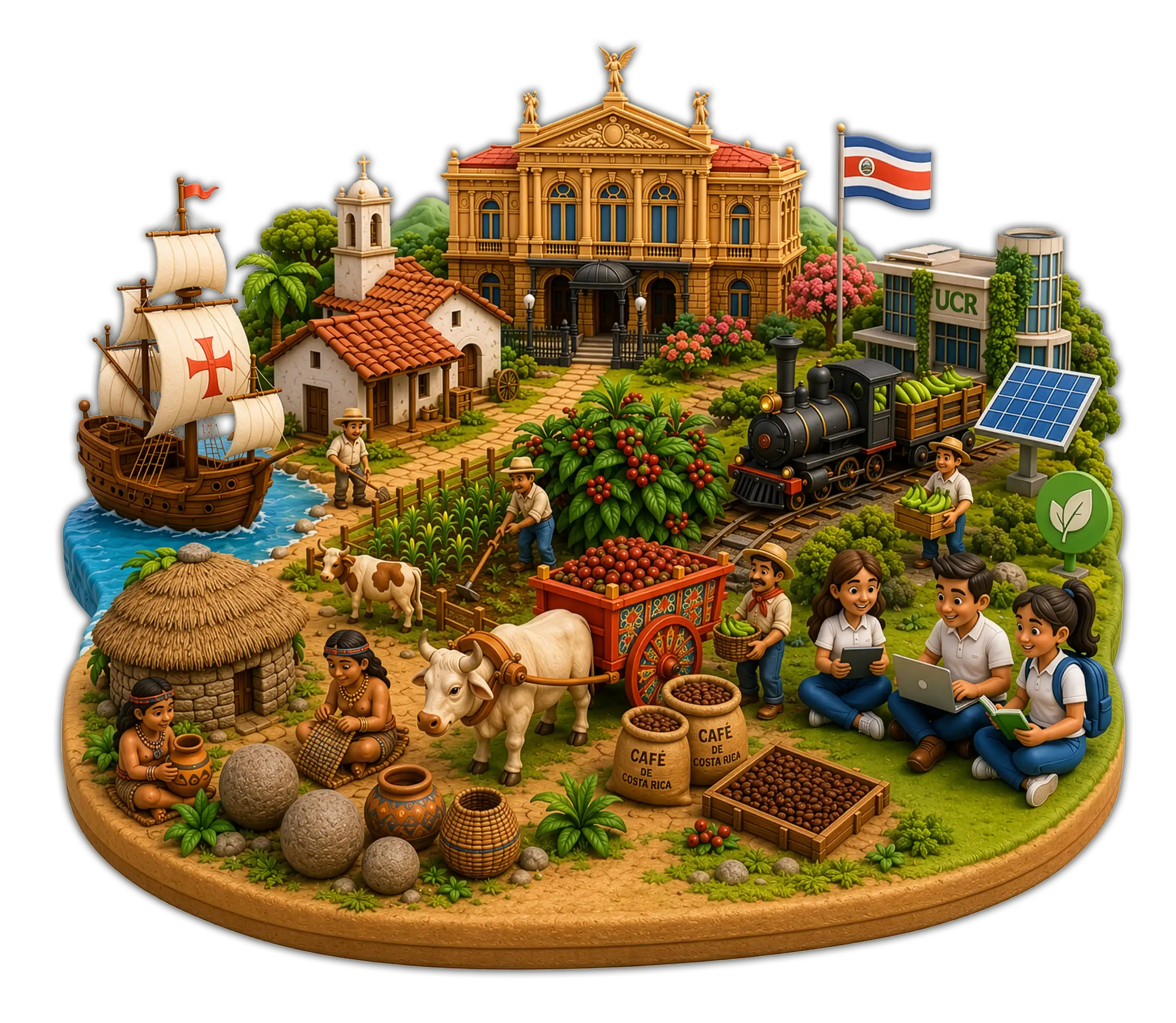
From the stone spheres of the Diquís to the cloud forests of Monteverde, every place you'll visit in Costa Rica carries a story. This is the short version — ten short chapters of Costa Rican history, each tied to places you can still walk through today.
10Chapters
500+Years
26%Protected land
10,000 BCE
1502
1821
1948
Today
Scroll the centuries
500 years of Costa Rica, at a glance.

Tap any chapter below to jump straight to it — or scroll on and walk through the centuries in order.

01
First peoples, first paths.
Chapter 01 c. 12,000 BCE — 1502

First peoples, first paths.

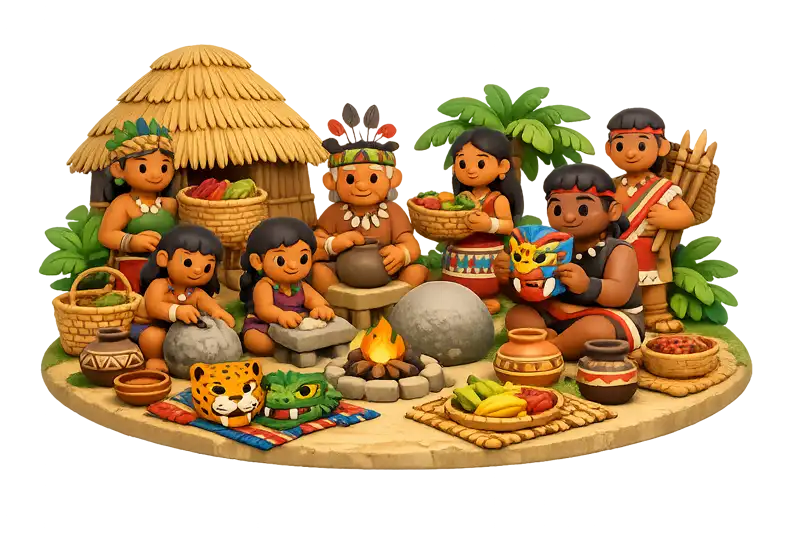
Long before maps and borders, the lands that became Costa Rica were home to the Chorotega, Huetar, Bribri, Cabécar, Boruca, Maleku and Térraba peoples. They farmed maize, cacao and beans, carved the mysterious stone spheres of the Diquís Delta, and traded jade and gold from the Pacific to the Caribbean.

Visit today
  • Guayabo National MonumentPre-Columbian ceremonial city near Turrialba — paved roads, aqueducts and petroglyphs older than the Roman Empire.
  • Boruca Indigenous ReserveLiving indigenous community in the Southern Zone — see the Fiesta de los Diablitos and traditional mask carving.
  • Museo del Jade · San JoséThe largest collection of American jade in the world — 7,000 objects telling the story of pre-Columbian craft.
02
When the sails reached the coast.
Chapter 02 1502

When the sails reached the coast.

On his fourth voyage in 1502, Christopher Columbus dropped anchor near today's Puerto Limón. The story goes that the gold ornaments worn by the locals inspired the name — "Costa Rica", the Rich Coast. The reality was different: scarce gold, dense jungle, and a remote frontier of the Spanish Empire that took decades to settle.

Visit today
  • Isla Uvita · LimónThe small island where Columbus is said to have first set foot in Costa Rica, still visible from the Caribbean shore.
  • Puerto Limón malecónCaribbean port city with Afro-Caribbean culture, colorful façades and the annual Día de las Culturas celebration each October.
03
A quiet, faraway colony.
Chapter 03 1502 — 1821

A quiet, faraway colony.

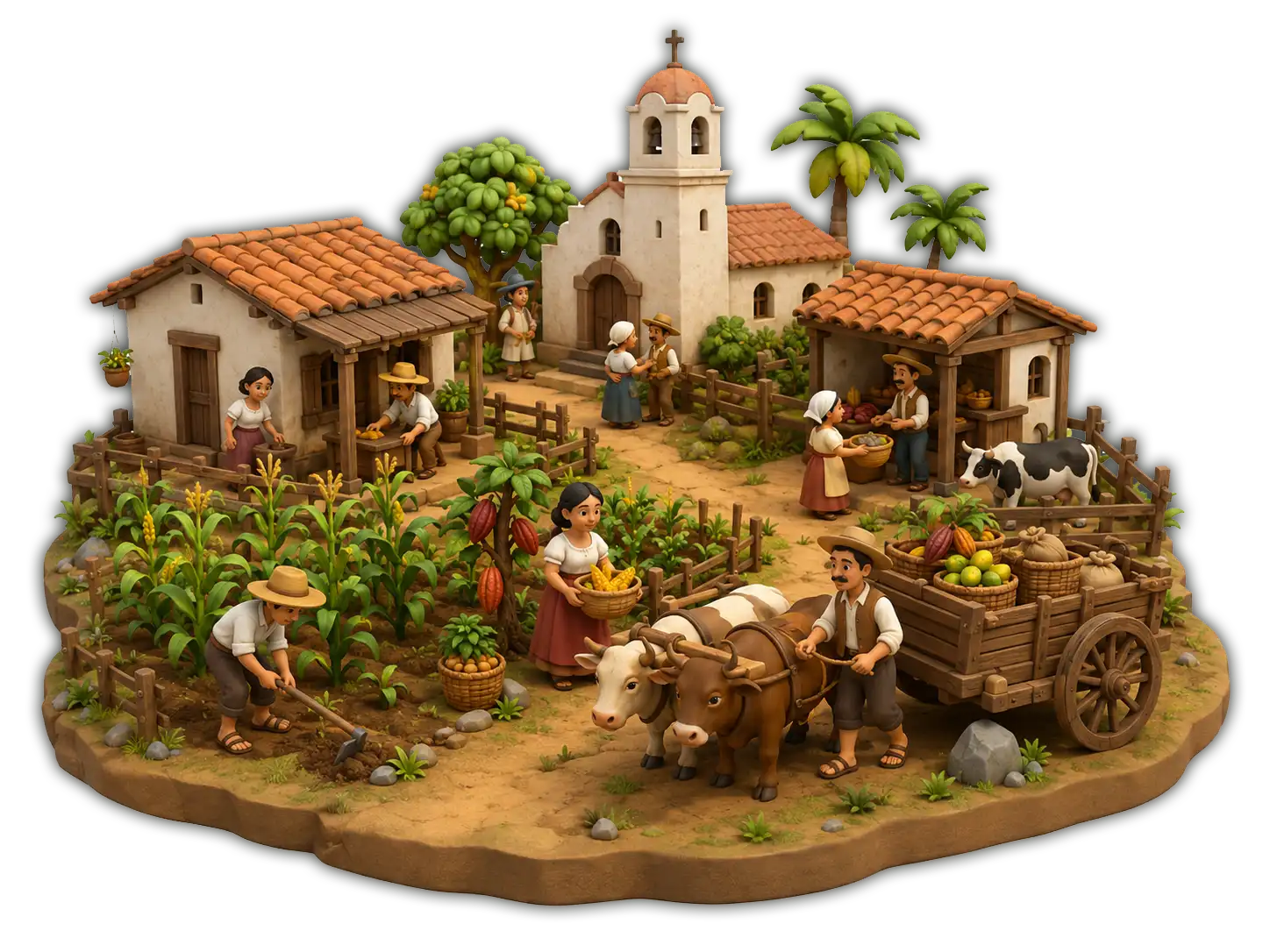
For three centuries, Costa Rica was the poorest, smallest and most isolated province of the Captaincy General of Guatemala. Small mestizo farms, oxen-drawn carts and adobe churches defined daily life. That very isolation — far from the mining centers and grand colonial capitals — shaped a society of modest landowners that would later set the country apart.

Visit today
  • Cartago · the old capitalCosta Rica's founding city (1563). Walk to the ruins of Santiago Apóstol and the Basilica of Our Lady of the Angels — the country's holiest shrine.
  • Orosi Valley ChurchThe country's oldest still-functioning colonial church (1743), set among coffee fields and hot springs an hour from San José.
  • Barva de HerediaCobbled streets, whitewashed adobe homes and the 1607 San Bartolomé church — colonial Costa Rica preserved.
04
A republic born by mail.
Chapter 04 15 September 1821

A republic born by mail.

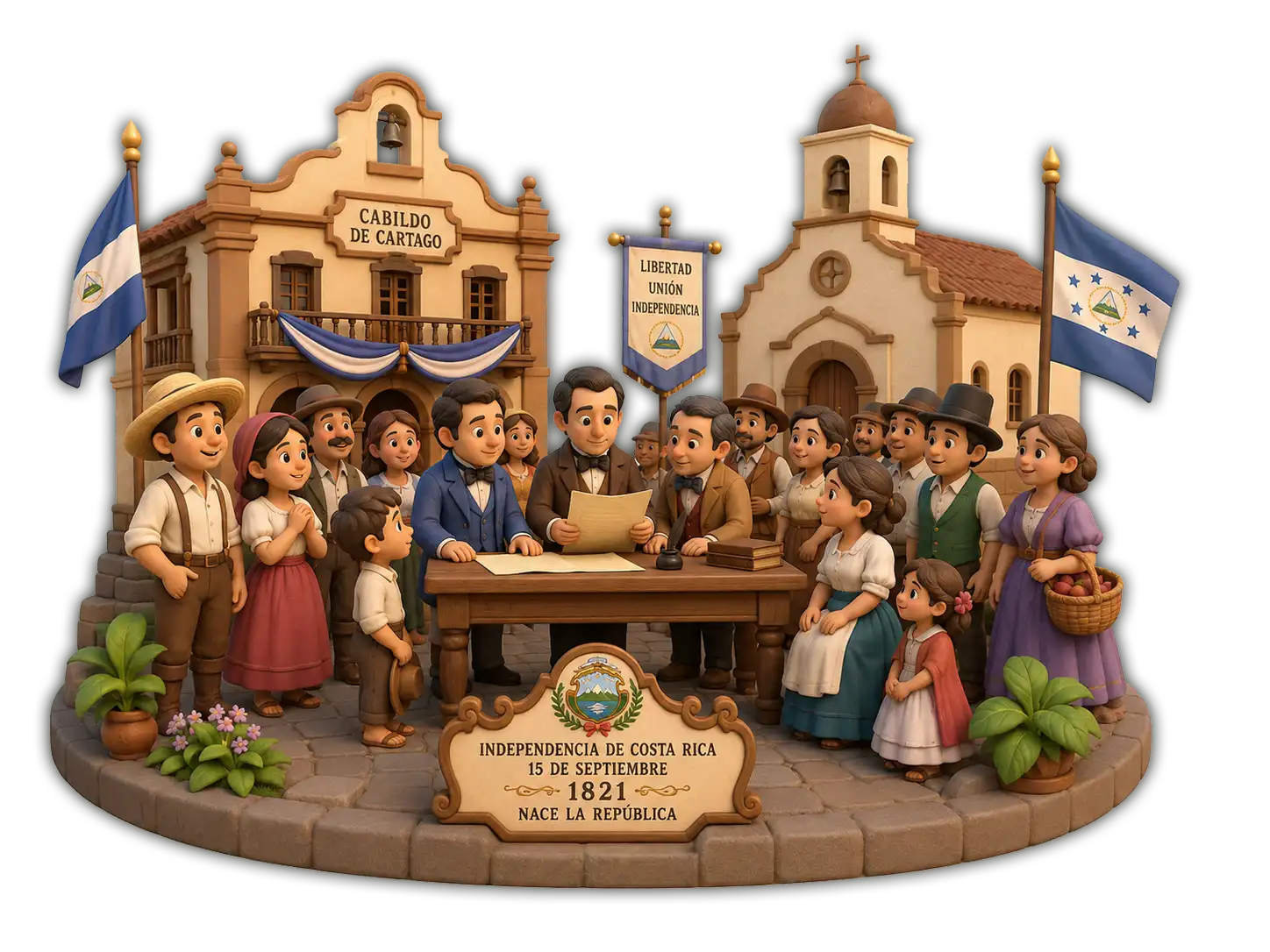
When Central America declared independence from Spain, the news reached Costa Rica almost a month later — by horseback. There was no battle, no revolution. The cabildos of Cartago, San José, Heredia and Alajuela met, debated, and quietly chose a new path. The Republic of Costa Rica was born in dialogue, not in war — a precedent that still shapes its identity.

Visit today
  • Plaza Mayor · CartagoWhere the cabildo gathered to sign Costa Rica's adherence to independence. A bronze plaque marks the founding moment.
  • Museo Nacional · San JoséInside the Bellavista Fortress: independence-era documents, the original flag designs, and the founding of the Republic.
  • Día de la Independencia · 15 SeptNationwide lantern parade the night before — the most beloved festival in the Costa Rican calendar.
05
The golden bean that built a nation.
Chapter 05 1830 — 1900

The golden bean that built a nation.

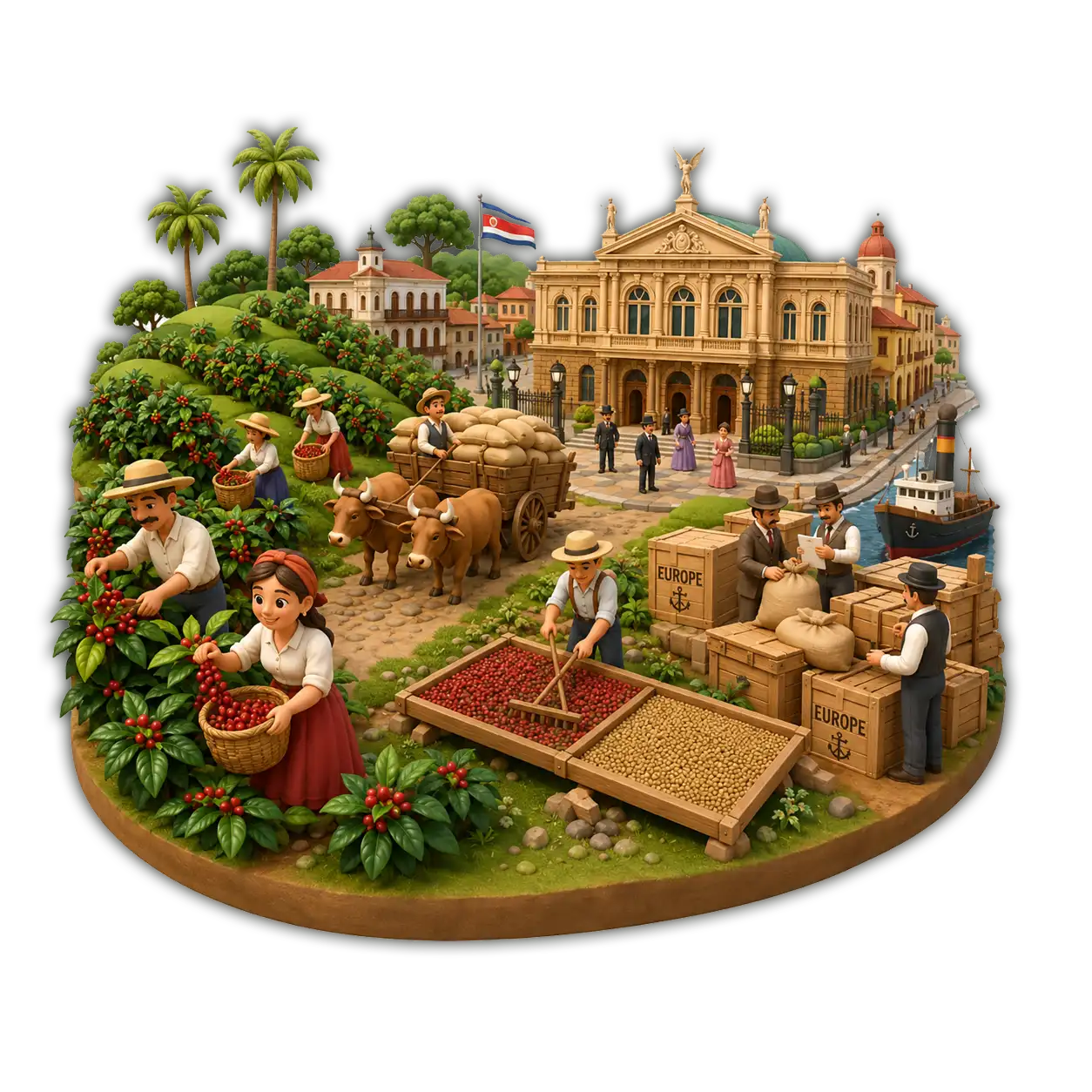
Coffee transformed Costa Rica. From the rich volcanic soils of the Central Valley, the "grano de oro" sailed to Europe and paid for railways, public schools, the National Theater, and a brand-new urban middle class. Coffee barons financed art and architecture; small farmers earned their place in a famously equal society. Today, every cup tells that story.

Visit today
  • Poás Coffee Farms · AlajuelaTour a working coffee finca on the slopes of Poás Volcano — picking, drying, roasting and tasting in one morning.
  • Teatro Nacional · San JoséBuilt in 1897 with a coffee export tax. Step inside for the marble staircases, frescoed ceilings and Sunday tours.
  • Coffee Routes and MonteverdeCoffee tours across Heredia and the Tilarán mountains — meet the families behind the country's specialty roasts.
06
Rails to the sea, bananas to the world.
Chapter 06 1871 — 1900

Rails to the sea, bananas to the world.

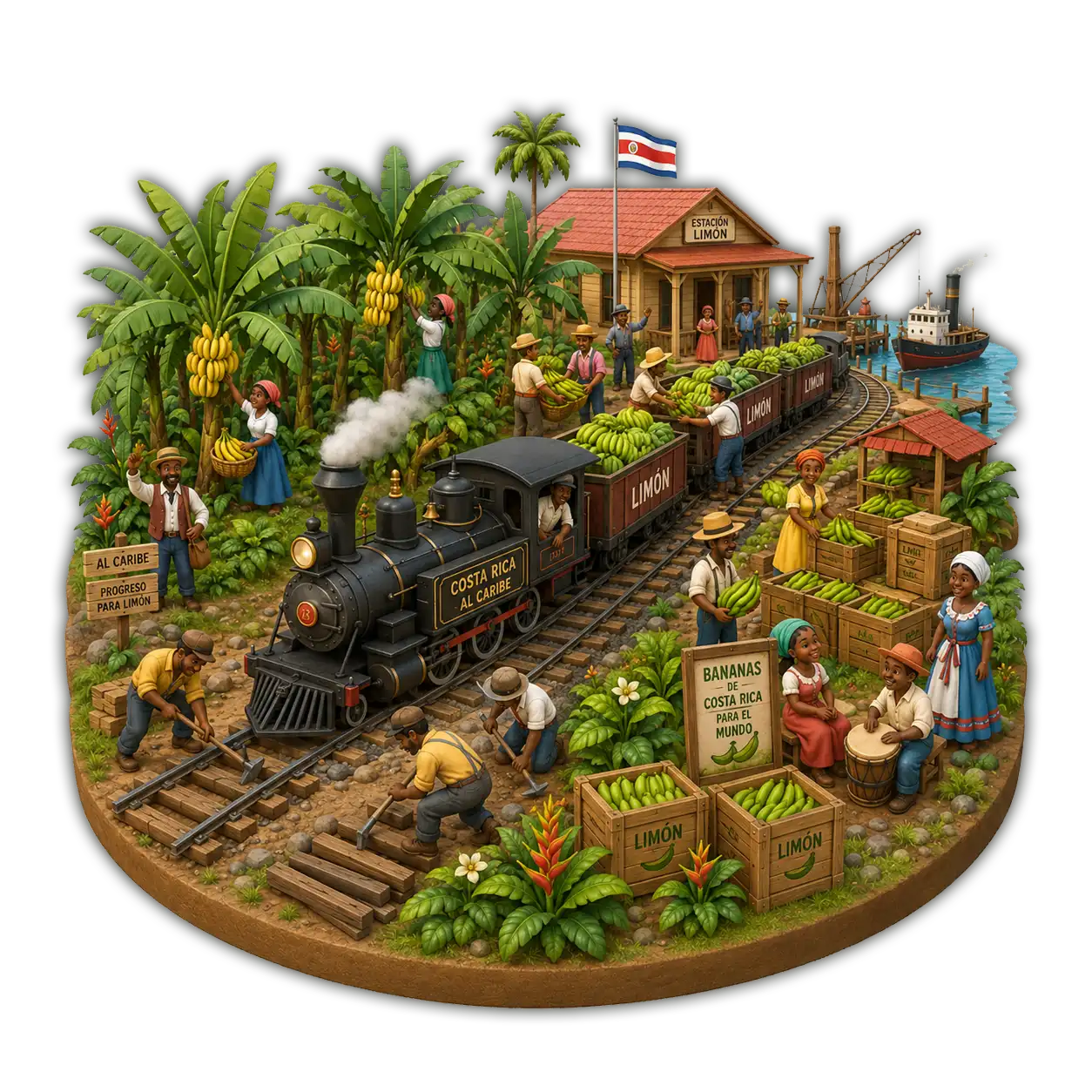
To move coffee to the Caribbean, Costa Rica built a railway through dense jungle and steep mountain. The construction brought waves of Jamaican, Italian and Chinese workers — the foundation of the country's Afro-Caribbean and immigrant cultures. The bananas planted along the tracks soon became a second export empire and shaped Limón's identity forever.

Visit today
  • Puerto Limón & Tortuguero canalsCaribbean port city with calypso music, patois Spanish and rondón stew — plus a boat ride through the rainforest canals.
  • Tren al Caribe · weekend routeThe historic railway runs occasional tourist trips through plantations and bridges between San José and the Atlantic.
  • EARTH University · GuácimoTour a modern sustainable banana plantation and learn how the fruit still moves the Caribbean economy today.
07
44 days that abolished the army.
Chapter 07 1948

44 days that abolished the army.

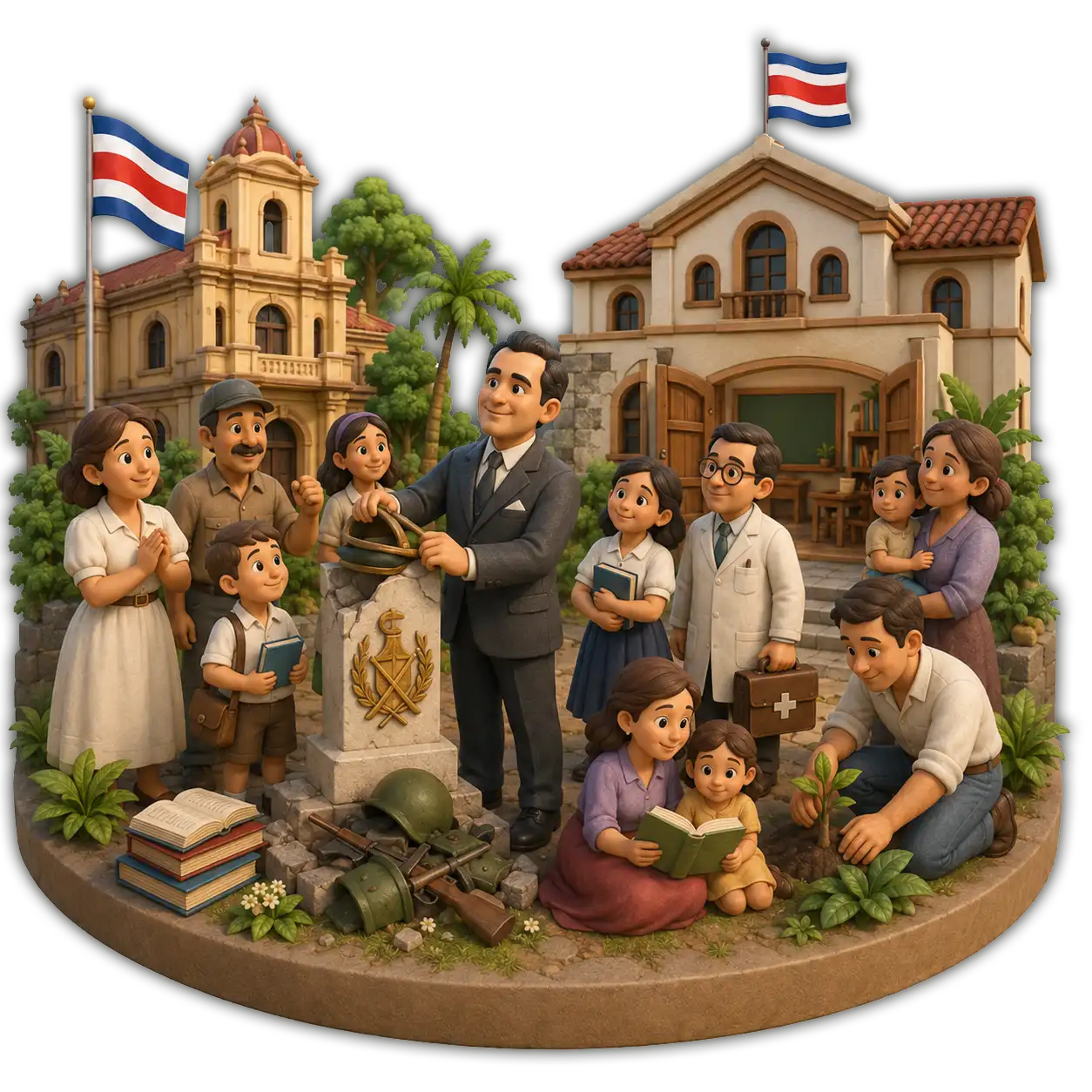
Costa Rica's brief 1948 civil war ended with a decision unique in the Americas: José Figueres Ferrer abolished the national army. The savings went to public education, healthcare and electrification. Universal suffrage, including the right of women to vote, was enshrined the same year. It is the founding act of modern, peaceful Costa Rica.

Visit today
  • Museo Nacional · Bellavista FortressThe bullet holes in the walls of the old army headquarters were left in place — a visible reminder of the abolition.
  • Plaza de la Democracia · San JoséBuilt in 1989 to mark 40 years without an army. Bronze statue of Don Pepe Figueres at its edge.
  • Casa Figueres · San RamónThe home of the man who ended the army, now a small museum on the road to the Pacific coast.
08
From farmland to silicon.
Chapter 08 1950 — 2000

From farmland to silicon.

The second half of the 20th century brought universal healthcare, the University of Costa Rica, a wave of new highways, and an opening to the world. By the 1990s, the country had become a regional hub for education, technology and biodiversity research — and tourism began its rise from a niche curiosity to the nation's biggest industry.

Visit today
  • Barrio Escalante · San JoséThe capital's most vibrant food and design district — third-wave cafés, neighborhood galleries and a great walking tour.
  • Universidad de Costa RicaThe flagship campus in San Pedro hosts open botanical gardens, museums and weekly cultural events anyone can visit.
  • Museo de los Niños & Galería NacionalA former penitentiary turned interactive museum — modern Costa Rica's history, science and art in one stop.
09
Marimba, masquerades and pura vida.
Chapter 09 Always

Marimba, masquerades and pura vida.

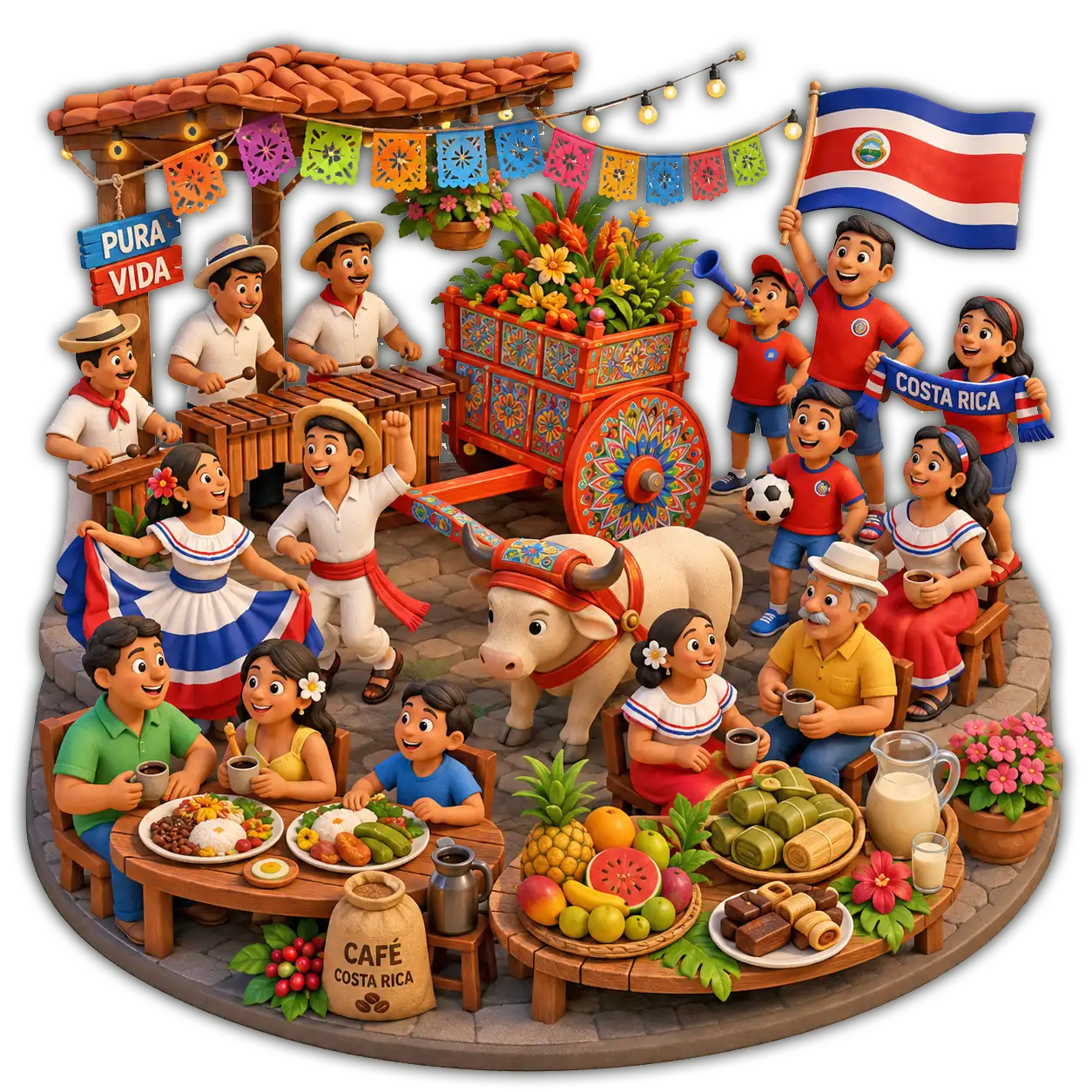
Costa Rican culture is a living mosaic: the painted oxcarts of Sarchí (a UNESCO heritage), the marimba of Guanacaste, Limón's calypso and reggae, Boruca's masks, Cartago's pilgrimages, and the universal greeting "pura vida". Folklore is not on display in museums — it lives in plazas, kitchens and Sunday afternoons.

Visit today
  • Sarchí · oxcart workshopsThe world's most colorful oxcarts are still hand-painted here. Watch artisans at work and ride the world's largest.
  • Fiestas de Palmares & ZapoteJanuary's bullfights, parades and concerts — the country's biggest popular festivals, just outside the capital.
  • Nicoya Peninsula · Blue ZoneHome to centenarians and traditional Chorotega-rooted cuisine — corn tortillas, tamales and chicheme by the fire.
10
A green nation, for the world to walk.
Chapter 10 2000 — today

A green nation, for the world to walk.

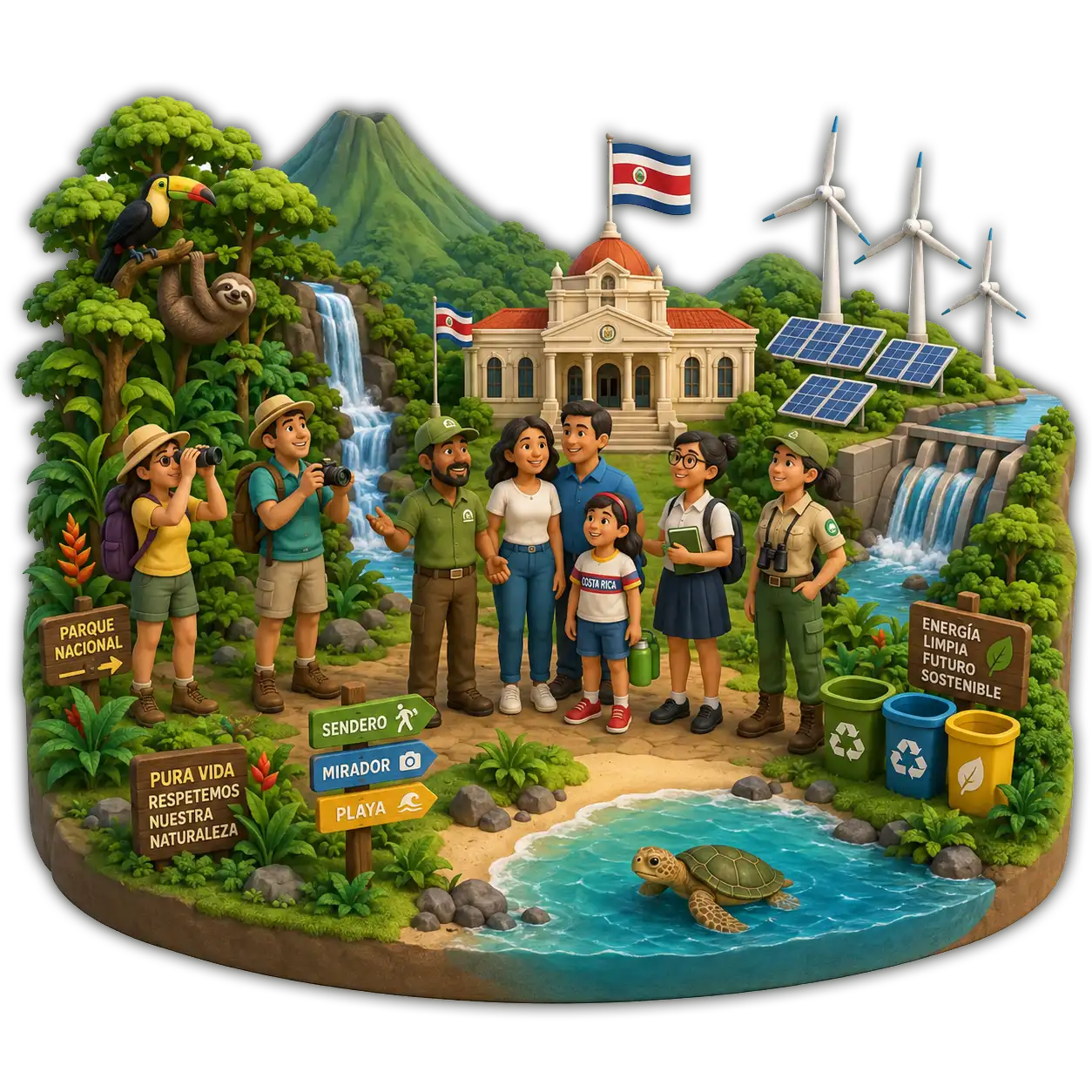
Today, Costa Rica protects more than 26% of its territory in national parks and reserves, runs almost entirely on renewable electricity, and welcomes nearly three million travelers each year. Tourism is the country's largest industry — and the story you read on every trail, in every village and on every CRMaps page begins with the chapters above.

Visit today
  • Manuel Antonio National ParkBeach, rainforest and capuchin monkeys on the Central Pacific — the country's most-loved park.
  • Monteverde Cloud ForestHanging bridges, quetzal sightings and the world's first community-led conservation reserve.
  • Tortuguero & CorcovadoFrom sea turtles nesting on Caribbean beaches to the wildest rainforest of the Osa Peninsula — Costa Rica's ecotourism crown.
The next chapter is yours

Costa Rica's story is still being walked.

Every CRMaps region was painted from the places these chapters describe — Jaco, Tamarindo, Playas del Coco, La Fortuna, Manuel Antonio. Open the interactive map and pick the chapter you want to live next.