ES EN
On this page Overview Interactive Map Photos FAQ
Regions Jacó Beach Arenal Volcano & La Fortuna Tamarindo Manuel Antonio & Quepos Playas del Coco & Hermosa Herradura Costa Ballena
Home Tide Chart & Weather Gastronomy History Geography Money Guide
Guanacaste · Costa Rica

Tamarindo, Costa Rica

North Pacific Surf & Lifestyle
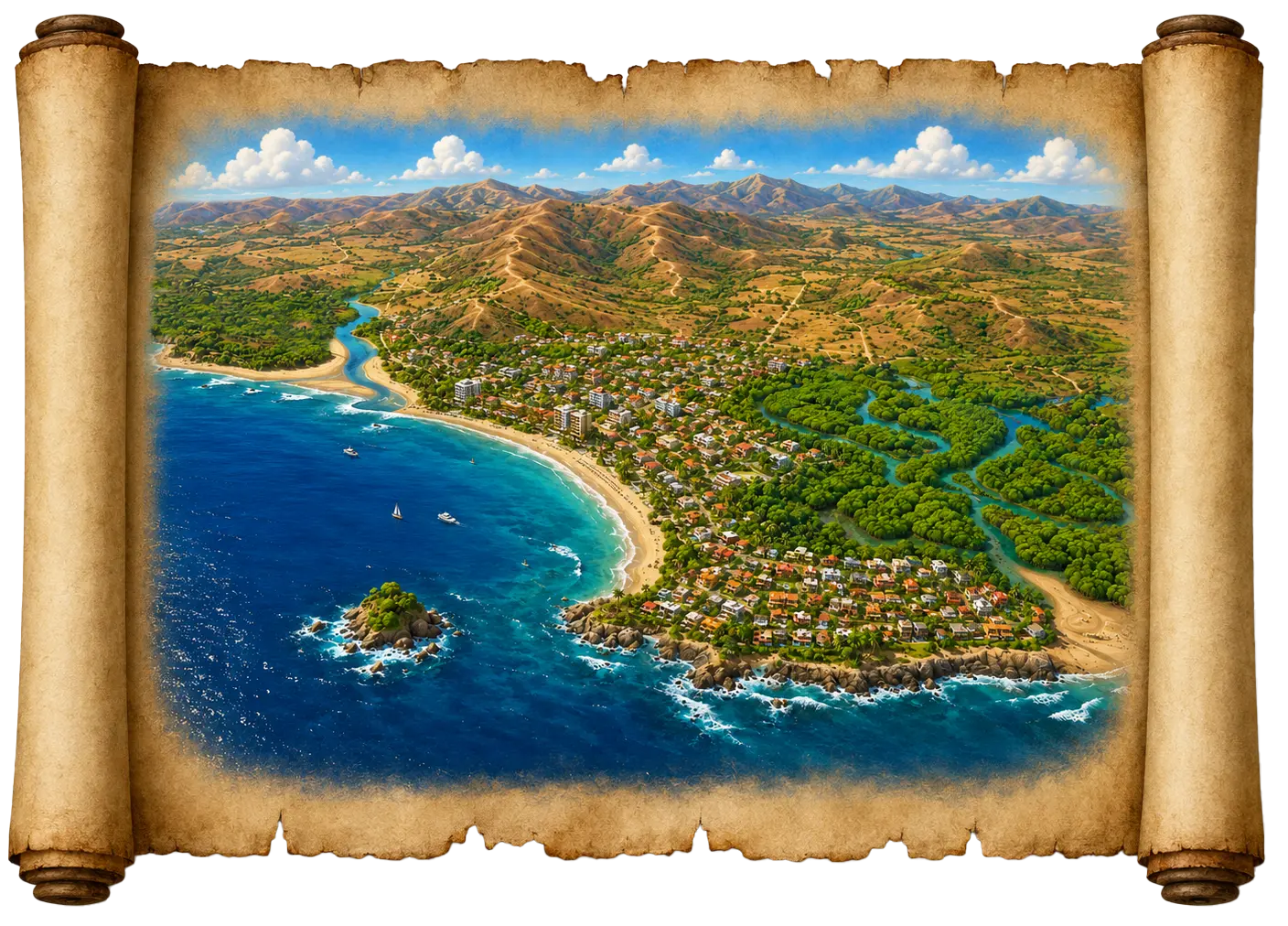
Illustrated map of Tamarindo, Guanacaste, Costa Rica

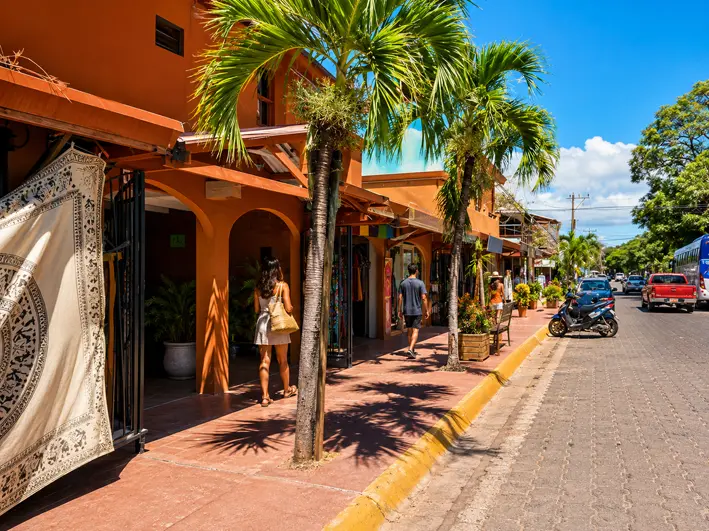
Tamarindo is one of Costa Rica's most recognizable beach towns: a lively North Pacific destination where surf culture, beach sunsets, restaurants, boutique hotels, nightlife, wellness, shopping, and coastal living come together in one easy-to-enjoy place.

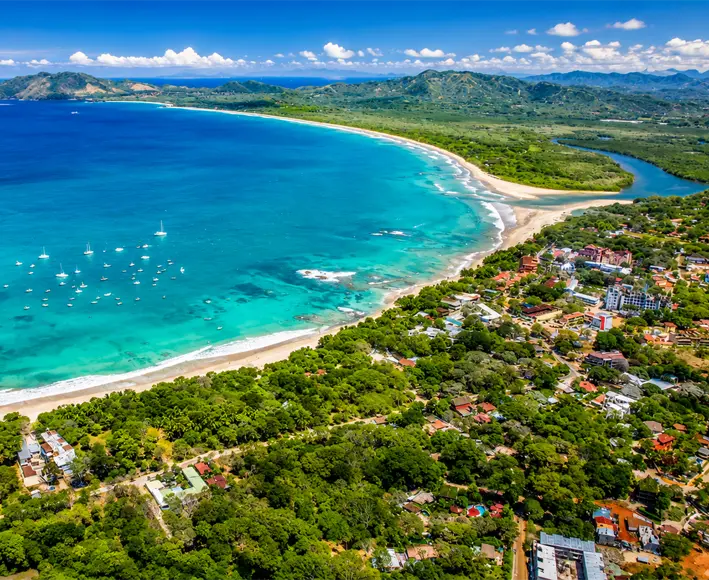
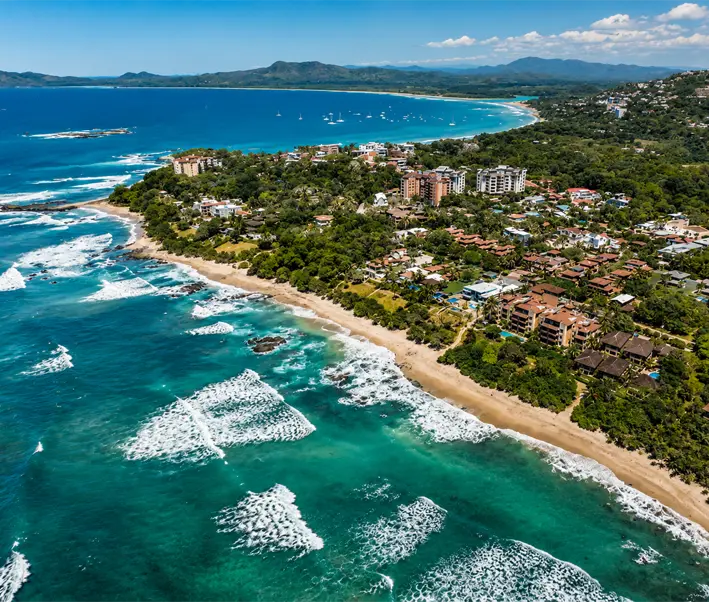
Located in Guanacaste, Tamarindo offers a different rhythm from the Central Pacific. The landscape is drier, brighter, and more open, with golden beaches, tropical dry forest, wide skies, warm evenings, and some of the most memorable sunsets in Costa Rica. It is a destination for travelers who want the beach, but also want restaurants, cafés, surf schools, shops, tours, and a social atmosphere close by.

Tamarindo is especially known for surfing. Beginners can take lessons right on the beach, while more experienced surfers can explore nearby breaks around the region. But Tamarindo is not only about surf. Visitors also come for catamaran tours, estuary wildlife trips, yoga, sportfishing, beach clubs, sunset dinners, nearby beaches, and the relaxed lifestyle of Guanacaste.
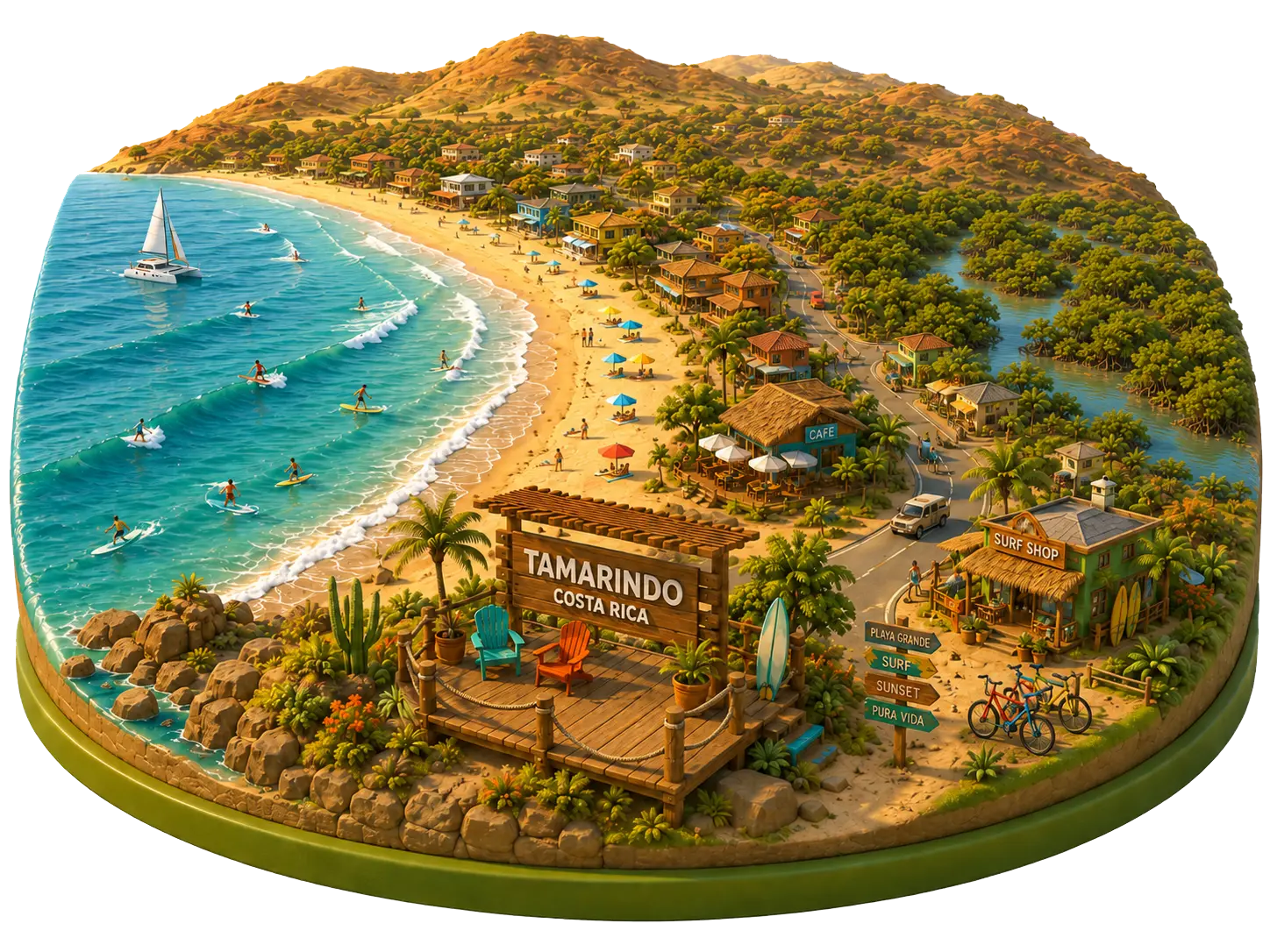
3D illustration of Tamarindo beach town, Costa Rica

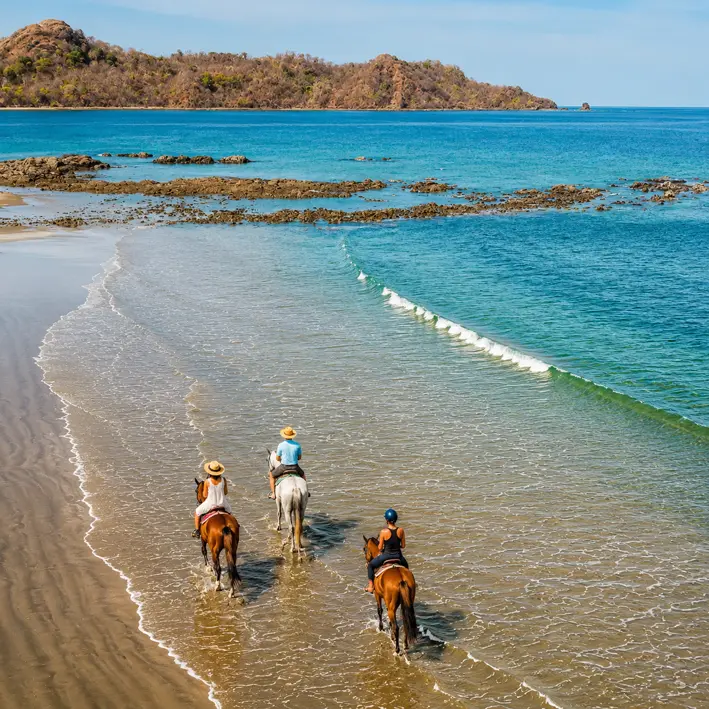
The town is compact enough to enjoy without always needing a car, but the broader area is full of nearby places worth exploring, including Playa Langosta, Playa Grande, Las Baulas National Marine Park, Avellanas, Conchal, Flamingo, Brasilito, and other beaches of the northern Gold Coast.

For tourists, Tamarindo is one of the easiest beach towns in Costa Rica to enjoy. For future residents, it offers a well-established international community, strong tourism infrastructure, and a coastal lifestyle with more services than many smaller beach villages.

Tamarindo works best for people who want beach life with movement: surf in the morning, cafés during the day, sunset on the sand, and dinner or nightlife within easy reach.

Explore Tamarindo

Interactive map

Click any pin to discover hotels, restaurants, tours, and services around town. Use the layers button to filter by category.

Good to know

Tamarindo FAQ

Yes. Tamarindo is worth visiting if you want a beach town with surf, sunsets, restaurants, tours, nightlife, shops, cafés, and easy access to other Guanacaste beaches. Tamarindo is not an isolated beach village. Its appeal is that it combines beach life with services. You can take surf lessons, walk to restaurants, book tours, visit nearby beaches, enjoy sunset from the sand, and still have access to supermarkets, pharmacies, transportation, and many accommodation options.

It is a strong choice for first-time visitors, surfers, couples, groups of friends, families, digital nomads, and travelers who want a social beach destination.

Tamarindo has one of the clearest "surf and lifestyle" identities in Costa Rica. Some beach towns are quieter, more rustic, or more spread out. Tamarindo is more active, more international, and more developed for visitors. It has surf schools, restaurants, beach bars, cafés, boutiques, tour offices, wellness services, and a strong community of both locals and foreign residents.

Its biggest advantage is convenience. You can enjoy the beach without giving up comfort, food options, nightlife, or access to nearby attractions.

Yes. Tamarindo is one of Costa Rica's easier beach towns to enjoy on foot. Many hotels, restaurants, surf schools, shops, cafés, bars, tour offices, pharmacies, and beach access points are located within a compact area. If you stay near the town center or beach area, you can often walk to most daily needs.

For nearby beaches, airport transfers, grocery runs, or day trips, visitors usually use a rental car, shuttle, taxi, golf cart, or organized tour.

Not always. If you stay in central Tamarindo and plan to spend most of your time at the beach, restaurants, surf schools, cafés, and local shops, you can manage without a car.

A car becomes useful if you want to explore nearby beaches such as Playa Grande, Playa Langosta, Avellanas, Conchal, Flamingo, Brasilito, or more remote areas of Guanacaste. It also gives more flexibility for families, longer stays, grocery shopping, and day trips. For a short visit focused on Tamarindo itself, no car is necessary. For exploring the region, a car helps.

The best international airport for Tamarindo is Guanacaste Airport in Liberia, also known as Liberia International Airport or LIR. Liberia is much closer to Tamarindo than San José. Most travelers visiting Tamarindo, Flamingo, Conchal, Papagayo, Playas del Coco, or the northern Guanacaste coast prefer flying into Liberia when possible.

San José International Airport can also work, especially if flights are cheaper or if your Costa Rica trip includes other regions, but the drive to Tamarindo is much longer.

Tamarindo is much closer to Liberia. From Liberia Airport, the drive to Tamarindo is usually around 1 to 1.5 hours depending on traffic, stops, and final location. From San José, the drive is much longer and usually requires several hours.

For most Tamarindo-focused trips, Liberia is the better airport.

Tamarindo is roughly 65 to 75 kilometers from Liberia Airport by road, depending on the route and exact destination. The transfer usually takes around 1 to 1.5 hours in normal conditions. Travel time can vary depending on traffic, roadwork, weather, and season.

This short airport connection is one of Tamarindo's strongest advantages compared with many other Costa Rican beach destinations.

A shuttle from Liberia Airport to Tamarindo usually takes around 1 to 1.5 hours. Private shuttles are usually the easiest option because they take you directly to your hotel, condo, Airbnb, or villa. Shared shuttles can be more economical but may take longer depending on schedules and stops.

For families or groups, a private transfer is often the most comfortable option.

Prices can vary a lot depending on availability, time of day, season, and demand. In general, visitors should not plan their airport arrival around Uber only. Tamarindo is a tourism destination where private shuttles, taxis, rental cars, and pre-booked transportation are more predictable for airport transfers.

For a smoother arrival, it is better to arrange transportation before landing, especially at night, during high season, or when traveling with family or luggage.

For Tamarindo, Liberia is usually better. Liberia Airport is much closer, easier, and more practical for reaching Tamarindo and the northern Guanacaste coast. San José can still make sense if your flight options are better, if you are visiting the Central Valley first, or if your Costa Rica route includes other destinations before going to the beach.

For a direct Tamarindo vacation, choose Liberia when possible.

Yes. Tamarindo is a popular beach for swimming, surfing, bodyboarding, and beach activities. The ocean conditions change depending on tide, swell, wind, and the area of the beach. Some parts are better for beginner surf lessons, while other areas may be more comfortable for swimming at calmer times.

As with any Pacific beach, visitors should pay attention to local conditions, stay close to shore if they are not strong swimmers, and ask surf schools or locals about the best area for the day.

Yes. Surfing is one of Tamarindo's main attractions. Tamarindo is especially popular for beginner and intermediate surfers because there are many surf schools, instructors, board rentals, and beach areas suitable for learning depending on daily conditions.

More experienced surfers can also use Tamarindo as a base to explore nearby surf spots around Guanacaste. The town has a strong surf culture, making it easy to take lessons, rent boards, meet instructors, and build a surf-focused trip.

Yes. Tamarindo can work very well for families. Families like Tamarindo because it has many lodging options, restaurants, supermarkets, pharmacies, easy beach access, surf lessons, boat tours, wildlife activities, and nearby beaches. It is more convenient than many remote beach towns because daily needs are easy to solve.

For families with young children, hotels or rentals with pools are a good option. The beach is active, so parents should always check ocean conditions before swimming.

Yes. Tamarindo is a strong destination for couples. It offers sunset dinners, boutique hotels, beach walks, surf lessons, catamaran tours, spa services, yoga, cocktails, nearby beaches, and plenty of restaurants. Couples can make the trip active, relaxed, social, or romantic depending on where they stay and how they plan their days.

For a quieter couple experience, staying slightly outside the busiest center or near Playa Langosta can be a good option.

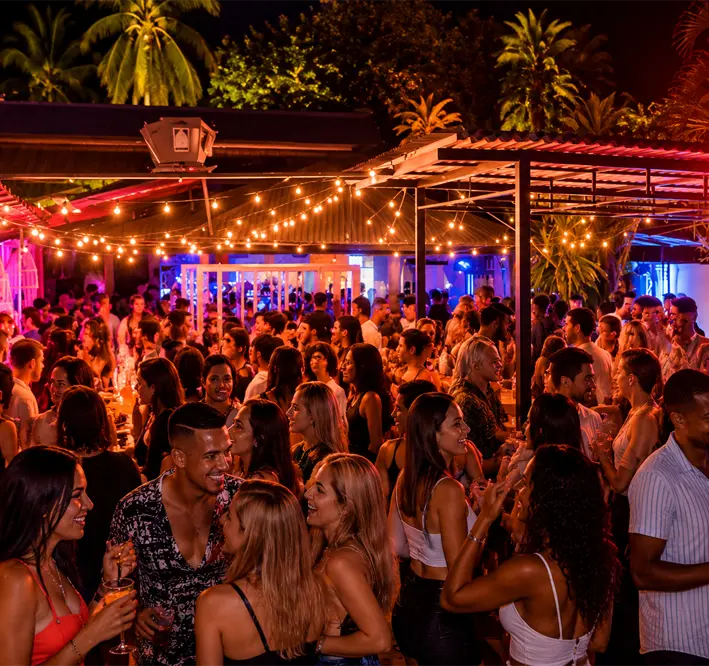
Tamarindo has one of the more active nightlife scenes in Guanacaste. There are beach bars, restaurants, live music, cocktail spots, casual nightlife, and social venues. However, Tamarindo is not only a party town. During the day, it feels more like a surf and lifestyle destination with cafés, beach activities, families, wellness travelers, shops, and tours.

The nice thing about Tamarindo is that visitors can choose their version of the town: surf-focused, family-friendly, social, romantic, wellness-oriented, or nightlife-centered.

Yes. English is widely spoken in many tourism-related businesses in Tamarindo. Hotels, restaurants, surf schools, tour companies, real estate offices, transportation services, shops, and many cafés are used to international visitors. Most travelers can manage well with English in the main tourist areas. For longer stays, basic Spanish is still very helpful, especially for local errands, rentals, repairs, appointments, and everyday conversations.

Useful phrases: Hola — Hello, Buenos días — Good morning, Buenas tardes — Good afternoon, Gracias — Thank you, Por favor — Please, and Pura vida — Costa Rica's most famous expression; it can mean hello, thanks, all good, great, or no problem depending on the situation.

In many developed areas of Costa Rica, tap water is commonly used, and many hotels and restaurants in Tamarindo serve drinking water confidently. That said, water conditions can vary by property, neighborhood, plumbing system, and season. The best practical advice is to ask your hotel, rental host, or restaurant directly. If you have a sensitive stomach, bottled or filtered water can be a simple choice.

For most visitors, Tamarindo is easy to manage because bottled water, filtered water, supermarkets, and restaurants are widely available.

Tamarindo can be visited year-round. The driest and sunniest months are usually from December to April, which is also the most popular season. This is a good time for beach days, sunsets, boat tours, and outdoor plans, but prices and demand can be higher. The green season, from May to November, brings warmer tropical color, fewer crowds, and a more relaxed pace. Rain is more common, but many days still have sunny mornings and beautiful sunsets.

For many travelers, November, early December, May, and June can be especially attractive because they often combine good weather, greener scenery, and fewer crowds than peak season.

Pack for sun, beach, walking, surf, and warm evenings. Good items to bring include: light clothing, swimwear, sandals, comfortable walking shoes, sunscreen, sunglasses, a hat or cap, a reusable water bottle, a beach bag, quick-dry clothing, a light rain jacket during green season, insect repellent, and casual evening clothes.

Tamarindo is relaxed. You do not need formal clothing unless you are planning a special dinner, wedding, or luxury resort stay.

Tamarindo is warm, sunny, social, and easy to enjoy. It is a good destination for travelers who like having restaurants, cafés, shops, surf schools, tours, and services close to the beach. The town is casual, but it is also one of Guanacaste's most popular destinations, so reservations are useful during busy periods.

The best way to enjoy Tamarindo is to plan a mix: surf or beach time, one boat or sunset tour, one wildlife or estuary experience, nearby beach exploration, and at least one slow evening watching the sunset.

Tamarindo offers a strong mix of beach, surf, food, nature, and tours. Popular things to do include: taking a surf lesson, watching sunset from the beach, joining a catamaran or sailing tour, exploring the Tamarindo estuary, visiting Playa Langosta, visiting Playa Grande and the Las Baulas area, trying sportfishing or boat tours, enjoying beach restaurants and cafés, taking a yoga or wellness class, and exploring nearby beaches like Avellanas, Conchal, Flamingo, and Brasilito.

Tamarindo works best when you combine the town itself with nearby coastal experiences.

Tamarindo is a good base for exploring several nearby beaches. Playa Langosta — close to Tamarindo, quieter and more residential; Playa Grande — known for surf and connection to Las Baulas National Marine Park; Avellanas — popular with surfers and travelers looking for a more rustic beach day; Playa Conchal — known for its shell-like sand and clear water; Flamingo — marina area, boating, restaurants, and a more upscale coastal feel; Brasilito — local beach town atmosphere close to Conchal; and Playa Negra — known for surf and a more relaxed coastal rhythm.

This is one of Tamarindo's biggest strengths: the town is active, but the surrounding beach network gives visitors many different experiences nearby.

Las Baulas National Marine Park is located around Tamarindo Bay and nearby beaches such as Playa Grande, Playa Ventanas, and Playa Langosta. The park is especially known for protecting leatherback turtle nesting areas, mangrove ecosystems, beaches, and wildlife. For visitors staying in Tamarindo, the park adds an important nature and conservation layer to the destination.

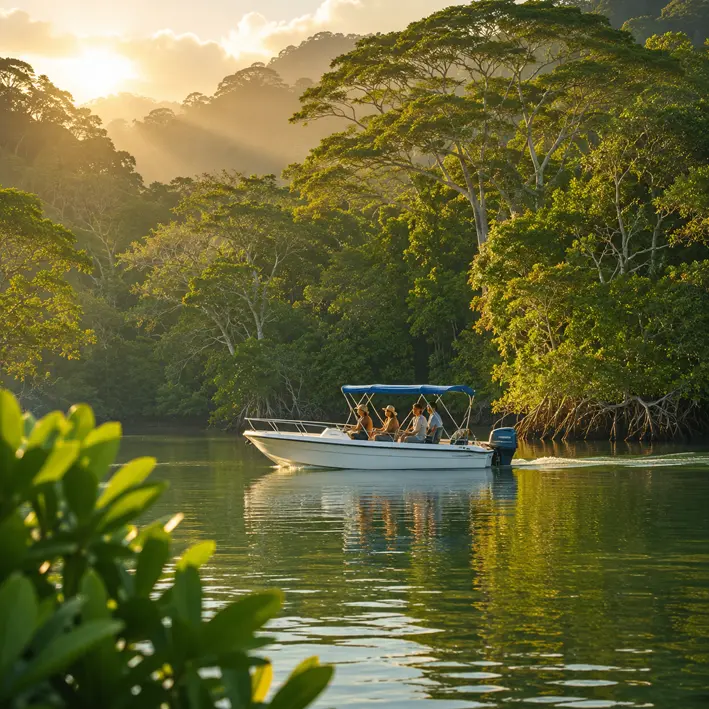
A good way to experience this side of Tamarindo is through a guided estuary or wildlife tour.

The main beach experience in Tamarindo is about swimming, surfing, walking, sunsets, and beach life. The nearby estuary and mangrove areas are natural wildlife habitats, so visitors should treat them as guided nature areas, not swimming areas. If you want to explore the estuary, the best way is with a local guide or organized boat tour.

This keeps the experience safe, educational, and much more interesting because guides can point out birds, reptiles, mangroves, and other wildlife that visitors would usually miss.

Yes, Tamarindo has more nature around it than many visitors realize. The town itself is active and developed, but nearby estuary areas, mangroves, beaches, and protected zones connect Tamarindo to wildlife. Visitors may see birds, iguanas, monkeys in nearby areas, marine life, and seasonal turtle-related conservation activity around the Las Baulas area.

For a better wildlife experience, choose a guided estuary tour, visit nearby protected areas, or explore quieter beaches early in the morning.

Yes. Tamarindo is one of Costa Rica's better-known beach towns for remote workers and digital nomads. It offers cafés, coworking-style environments, many rentals, restaurants, gyms, surf, nightlife, beach access, and a social international community. The lifestyle is attractive for people who want to work during the week and enjoy the beach before or after work.

For longer stays, it is important to check internet quality directly with the rental property before booking, especially if video calls or large uploads are part of your work.

Tamarindo can be a good place to live for people who want an active beach lifestyle with services. Compared with smaller beach towns, Tamarindo offers more restaurants, shops, gyms, cafés, rental options, schools in the broader area, transportation services, wellness options, and an international community. It is especially attractive for surfers, remote workers, entrepreneurs, retirees, families who like the coast, and people connected to tourism or real estate.

Living in Tamarindo is different from vacationing there. Future residents should think about housing costs, traffic in high season, heat, dust in dry season, rain in green season, transportation, schools, healthcare access, and how often they need to travel to Liberia or San José. For the right person, Tamarindo offers a very appealing version of Costa Rican beach life.

Tamarindo works for both, but in different ways. For tourists, Tamarindo is easy, sunny, social, and full of options. You can enjoy the beach, learn to surf, eat well, go out at night, explore nearby beaches, and book tours without much complication.

For residents, Tamarindo is attractive because it offers coastal living with a stronger service base than many smaller towns. It is best for people who enjoy an active beach community, not those looking for complete isolation.

It depends on the style of trip. Tamarindo can work for budget travelers, mid-range visitors, families, couples, surfers, and luxury travelers. The biggest expenses are usually lodging, restaurants, tours, transportation, surf lessons, nightlife, and rental cars. A simple trip can focus on modest lodging, local meals, walking, beach time, and selected activities. A more comfortable trip may include boutique hotels, private transportation, surf lessons, boat tours, nicer restaurants, and cocktails.

Tamarindo offers flexibility, but it is one of Costa Rica's more popular beach towns, so high season can be more expensive.

It can be enough only for a very simple, budget-conscious trip. A traveler on this budget would need basic lodging, local meals, limited paid activities, walking instead of private transportation, and careful spending on drinks, tours, and restaurants.

For a more comfortable Tamarindo trip with surf lessons, tours, restaurants, cocktails, and better lodging, a higher budget is recommended.

Yes, $1,000 can be enough for a more comfortable week in Tamarindo, depending on season, lodging, and activities. It works better if you share accommodation, choose mid-range lodging, eat a mix of local and tourist-style meals, and select a few important activities instead of booking tours every day.

If you want beachfront lodging, private transfers, premium tours, nightlife, and upscale restaurants, you should plan a higher budget.

For a tourist, $20 is useful but not a lot. It may cover a casual local meal, a short ride, snacks, drinks, a beach rental, small souvenirs, or part of an activity. It usually will not cover major tours, premium restaurants, long transfers, or a full night out.

Tamarindo has options at different price levels, but visitors should remember that it is a popular beach town with strong international demand.

Costa Rica's official currency is the Costa Rican colón. In Tamarindo, U.S. dollars are also accepted in many hotels, tour companies, transportation services, and tourist-facing businesses. Colones are useful for local restaurants, small shops, buses, tips, markets, and everyday purchases.

The best option is to carry a card, some colones, and a small amount of U.S. dollars as backup.

Yes. Tamarindo is one of Costa Rica's most international beach towns. The area receives visitors from the United States, Canada, Europe, Latin America, and many other regions. Tourism is a major part of the local economy, and many businesses are used to working with international travelers.

At the same time, Tamarindo is still part of Guanacaste, with local families, workers, fishermen, entrepreneurs, schools, traditions, and community life. Visitors who respect the local rhythm and support local businesses usually have a better experience.

Yes. Tamarindo is part of the broader northern Guanacaste beach region often described as Costa Rica's Gold Coast. This area is known for sunny weather, dry tropical landscapes, beautiful beaches, surf, resort areas, boutique hotels, sportfishing, sailing, and strong tourism infrastructure.

Tamarindo is one of the most active and accessible towns in that coastal network.

Tamarindo is Costa Rica's North Pacific surf and lifestyle town: a sunny Guanacaste destination where beach life, surf culture, sunsets, restaurants, nightlife, nearby nature, and coastal living come together in one of the country's most recognizable beach communities.